 trivedi associate September 28, 2026
If you’ve searched for information on thermic fluid heaters, chances are you’ve found plenty of articles that explain what the equipment is and how it works — and then stop right there.
What’s often missing is the part that actually matters once a unit is up and running: the safety controls that keep it operating properly, the statutory inspection obligations plants need to be aware of, and how to look after the thermal fluid so the system stays safe and efficient over its working life. This guide covers all of that, with a specific look at what compliance looks like for units operating in Gujarat.
What Is a Thermic Fluid Heater?
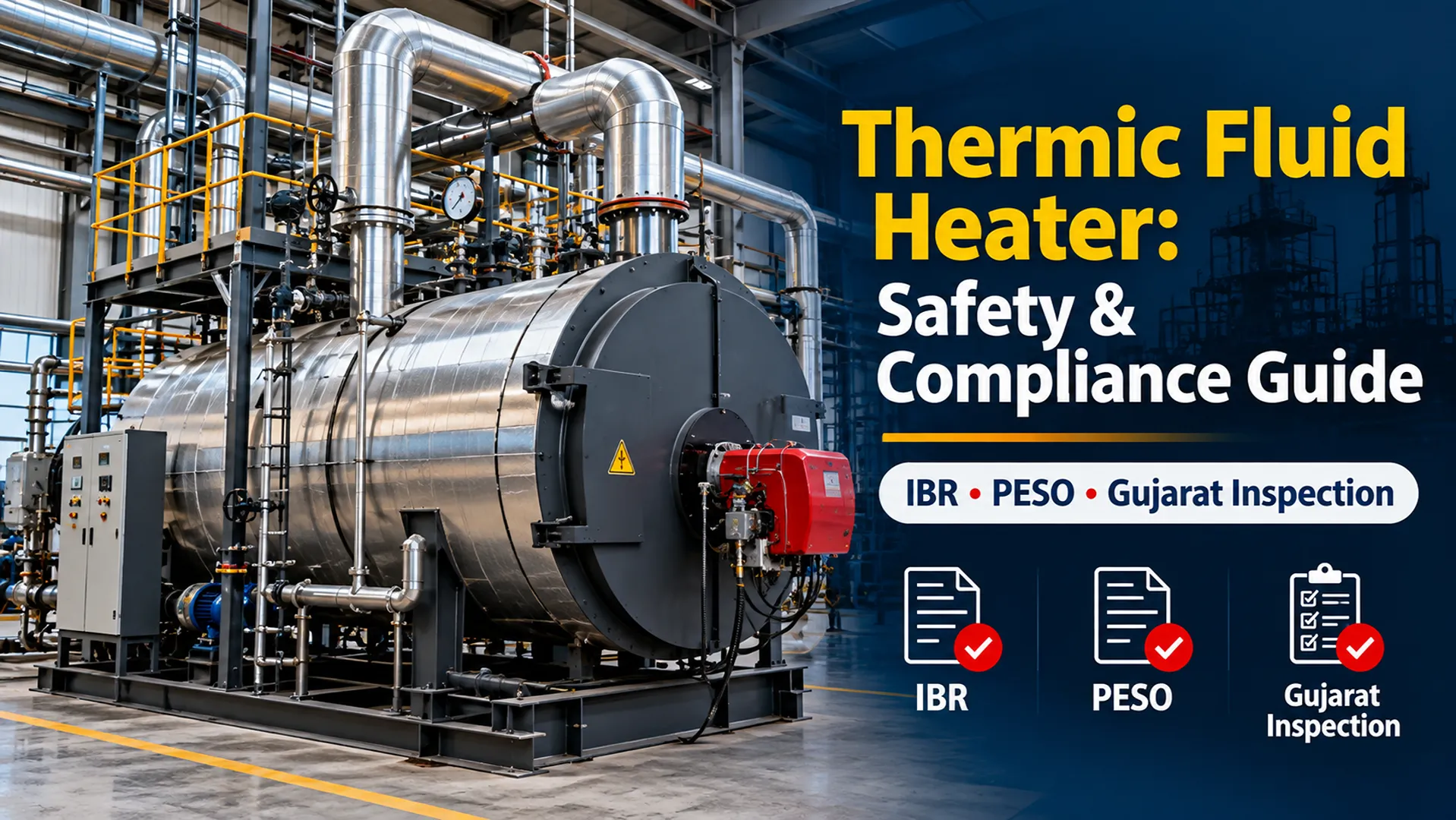
A thermic fluid heater — also known as a thermal oil heater or hot oil heater — is a heating system that transfers heat indirectly using a circulating thermal fluid, instead of relying on steam under pressure like a conventional boiler does.
The thermal fluid is heated in a coil and then pumped through a closed circuit to wherever the heat is needed in the process. Because the system operates at low pressure even at high temperatures, it’s widely used across industries that need consistent, high-temperature heat without the pressure-related risks associated with steam systems.
How a Thermic Fluid Heater Works’
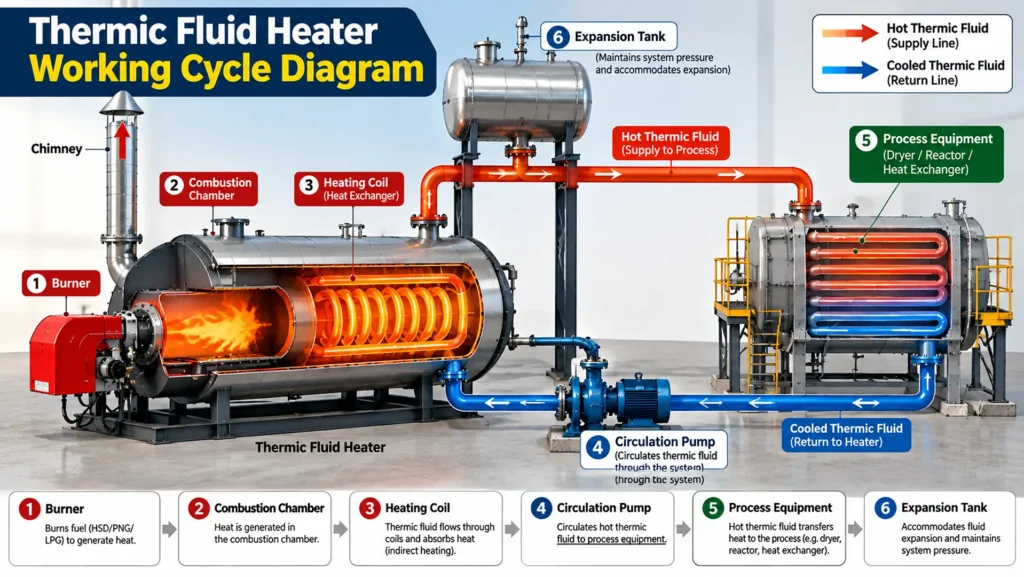
Step-by-Step Working Cycle
The working cycle is fairly straightforward once you break it down. Fuel is burned in the combustion chamber, and the heat generated is absorbed by the thermal fluid as it passes through the heating coil. A circulation pump then pushes this heated fluid through the piping network to the process equipment that needs heat — this could be a dyeing machine, a reactor, a dryer, or similar.
Once the fluid gives up its heat at the point of use, it returns to the heater through a return loop, where it’s reheated and sent out again. This closed-loop cycle repeats continuously as long as the system is running.
Types by Fuel
Thermic fluid heaters are generally categorised by the fuel they run on:
- Solid fuel — uses wood, coal, briquettes, or similar solid fuels
- Liquid fuel — runs on furnace oil, diesel, or similar liquid fuels
- Gas fuel — uses natural gas or LPG
- Electric — heats the fluid using electric heating elements
- Biomass — runs on agricultural or industrial biomass waste
The choice usually comes down to fuel availability, cost, and the specific process requirements of the plant.
Applications by Industry
Thermic fluid heaters are used across a wide range of industrial processes, and Gujarat’s manufacturing base makes good use of them. In the textile and dyeing sector, they provide the steady heat needed for dyeing, drying, and finishing processes. Chemical industries rely on them for reactions that need precise, consistent temperature control.
Food processing units use them for cooking, drying, and other thermal processes where indirect heating helps maintain product quality. And in plywood and rubber manufacturing, thermic fluid heaters support pressing and curing operations that need sustained high temperatures. Across all these applications, the appeal is the same — reliable heat delivery without the complexity of high-pressure steam systems.
Key Safety Controls in a Thermic Fluid Heater System
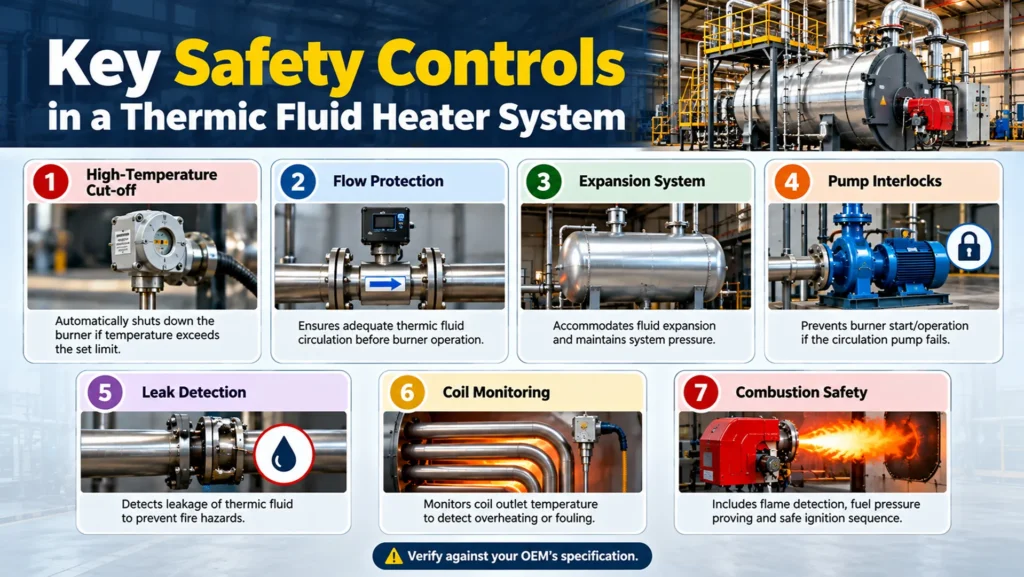
Because thermic fluid heaters operate at high temperatures, having the right safety controls in place matters a great deal. The specific devices fitted to any given system will depend on the equipment design and the manufacturer’s specification, but most systems are built around a similar set of protective categories.
Temperature Monitoring & High-Temperature Cut-off
Temperature sensors track the fluid temperature at key points in the circuit, and a high-temperature cut-off is designed to shut down the burner or heating source if temperatures exceed safe limits.
Circulation / Flow Protection
Low-flow or no-flow protection devices are meant to stop the heating source if fluid circulation drops or stops, since heating without adequate flow can lead to localised overheating.
Expansion System
An expansion tank accommodates the natural expansion of the thermal fluid as it heats up, and some systems use nitrogen blanketing to reduce oxidation of the fluid inside the tank.
Pump Protection & Interlocks
Pump interlocks are typically designed to prevent the heater from firing if the circulation pump isn’t running, since the pump is what keeps fluid moving through the heating coil.
Leakage Detection & Containment
Leak detection arrangements and containment measures help identify and manage fluid leaks early, reducing fire risk and fluid loss.
Heating Coil Integrity & Monitoring
Monitoring of the heating coil helps catch issues like coking or localised hot spots before they lead to coil failure.
Combustion & Fuel System Safety
Burner interlocks and flame failure devices are intended to shut off fuel supply if the flame is lost or combustion isn’t functioning as expected, reducing the risk of unburned fuel accumulating.
These are illustrative categories rather than a fixed, universal checklist — the actual safety devices fitted to a particular thermic fluid heater depend on its design and the OEM’s specification, and should always be verified against the equipment manufacturer’s manual.
Statutory Compliance Requirements in India
IBR (Indian Boiler Regulations) Applicability
One of the most common questions plant operators have is whether their thermic fluid heater falls under the Indian Boiler Regulations (IBR). The honest answer is: it depends. IBR applicability is determined by the definition and scope set out under the Boilers Act and the IBR Regulations, which typically consider factors like design pressure and design temperature.
Because thermic fluid heaters vary in their operating parameters, whether a specific unit falls within or outside IBR scope isn’t something that can be assumed either way. It’s best to confirm this for your specific unit, ideally by checking with the statutory authority or a qualified inspecting body rather than relying on general assumptions.
PESO/Fuel Storage Requirements – Where Applicable
PESO (Petroleum and Explosives Safety Organisation) requirements come into play based on the storage and handling of regulated fuels — for example, the quantity of diesel or furnace oil stored on site — rather than simply because a system uses thermal oil as its heat transfer medium. If your thermic fluid heater uses liquid fuel and you store that fuel above certain quantities, PESO licensing may become relevant. This is worth checking against your actual fuel storage volumes rather than assuming it applies to the heater itself.
Factory Inspection & State-Level Compliance
Beyond central regulations, plants also need to work within the general obligations set out under the Factories Act and the relevant state factory rules, which apply to pressure and heating equipment used in industrial premises. The specific requirements can vary, so it’s worth confirming what applies to your installation with your local factory inspectorate rather than assuming a standard set of rules covers every case.
Statutory Inspection & Safety Requirements for Thermic Fluid Heaters in Gujarat
For plants operating in Gujarat, the state factory inspectorate plays a role in overseeing compliance for equipment like thermic fluid heaters, alongside whatever central IBR or PESO requirements may apply based on the unit’s specifications and fuel storage. In general, industrial units are expected to maintain periodic inspection schedules and proper documentation as part of their factory compliance obligations — this typically includes records of inspections, maintenance, and any statutory approvals relevant to the equipment.
Practically speaking, plants operating thermic fluid heaters in Gujarat should look at a few things locally: whether the unit needs to be registered with the relevant authority, what inspection intervals are expected, and how records should be maintained going forward. Because specific requirements can be updated or vary based on unit specifications, it’s best to confirm current requirements directly with the relevant Gujarat factory or boiler inspectorate rather than relying on general guidance alone. This is one area where getting it right the first time — with a proper local consultation — saves a lot of back-and-forth later.
Thermic Fluid Maintenance & Fluid Life
How to Read Fluid Degradation Symptoms
Thermal fluid doesn’t last forever, and it usually gives some warning signs before it needs attention. A change in colour — typically darkening — is one of the earliest indicators. An unusual or burnt odour can point to thermal breakdown. A shift in viscosity, either thickening or thinning compared to fresh fluid, is another sign worth watching. And the presence of sludge or sediment in the system usually means degradation has progressed further and needs to be addressed.
Testing & Replacement — Follow Fluid Condition and OEM/Fluid Manufacturer Guidance
There isn’t a single universal number for how often thermal fluid should be tested or replaced — it really comes down to the fluid manufacturer’s recommendations, the OEM’s guidance for your specific system, and how demanding your operating conditions are. Testing is typically based on parameters like flash point, viscosity, and acid number, and the results of these tests — rather than a fixed calendar interval — should guide when replacement is needed.
Carbon Deposit (Coking) Formation & Prevention
Coking happens when thermal fluid breaks down under excessive heat and forms carbon deposits inside the heating coil. This reduces heat transfer efficiency and, if left unchecked, can damage the coil over time. Preventing coking generally comes down to avoiding localised overheating, maintaining proper flow rates, and keeping the fluid within its recommended operating temperature range.
Common Failures and How to Prevent Them
Fluid Leakage
Leaks often start small — at pump seals, flanges, or valve connections — before becoming more noticeable. Early warning signs include visible seepage, a drop in fluid level in the expansion tank, or a burnt-oil smell near fittings. Regular visual inspection of connection points goes a long way in catching leaks early.
Carbonisation, Hot Spots & Overheating
Hot spots typically form when flow through a section of the coil is restricted or uneven, causing that section to overheat relative to the rest of the system. Over time, this accelerates fluid degradation and coil wear in that area. Keeping flow rates consistent and monitoring temperature across different points in the circuit helps prevent this from developing unnoticed.
Pump & Circulation Failures
Since the pump is what keeps the fluid moving, any failure here has a direct impact on the whole system. Common causes include seal wear, bearing failure, or cavitation. Because circulation is so central to safe operation, most systems are designed with pump interlocks that stop the heater from firing if circulation isn’t confirmed.
Equipment & Capacity Considerations — Brief Overview
When it comes to selecting the right thermic fluid heater, the key factors to think through are heat load requirements, operating temperature, compatibility with the thermal fluid being used, and fuel availability at your site. Actual sizing — whether that’s heat output, capacity, or fuel consumption — depends heavily on your specific process needs, and this is best worked out with a manufacturer or a qualified engineer who can assess your requirements directly rather than relying on general figures.
FAQs
Thermic fluid heaters generally operate at lower pressures than steam boilers even at high temperatures, which is often cited as an advantage from a pressure-risk standpoint. That said, safety in either system depends heavily on proper design, maintenance, and adherence to safety controls, so it’s not a straightforward comparison in every case.
Fluid life depends on operating temperature, how well the system is maintained, exposure to air or moisture, and how closely the system stays within its recommended operating range. Regular testing is the most reliable way to track actual fluid condition rather than assuming a fixed lifespan.
This depends on the design pressure and temperature of the specific unit and how it falls within the scope defined under the Boilers Act and IBR Regulations. It’s best confirmed for your specific unit rather than assumed either way.
There’s no single fixed interval — testing frequency should follow the fluid manufacturer’s guidance, OEM recommendations, and how demanding your operating conditions are.
This depends on the specific equipment design and the OEM’s specification. Common categories include temperature monitoring, flow protection, pump interlocks, and combustion safety devices, but the exact configuration varies by manufacturer.
Conclusion
Operating a thermic fluid heater safely and in compliance with the law comes down to two things: verifying what statutory requirements actually apply to your specific unit, and following the OEM’s guidance closely when it comes to safety controls and fluid maintenance. Given how much of this depends on the specifics of your installation, it’s worth getting a proper inspection and compliance consultation for your system rather than relying on general assumptions.