 trivedi associate June 26, 2026
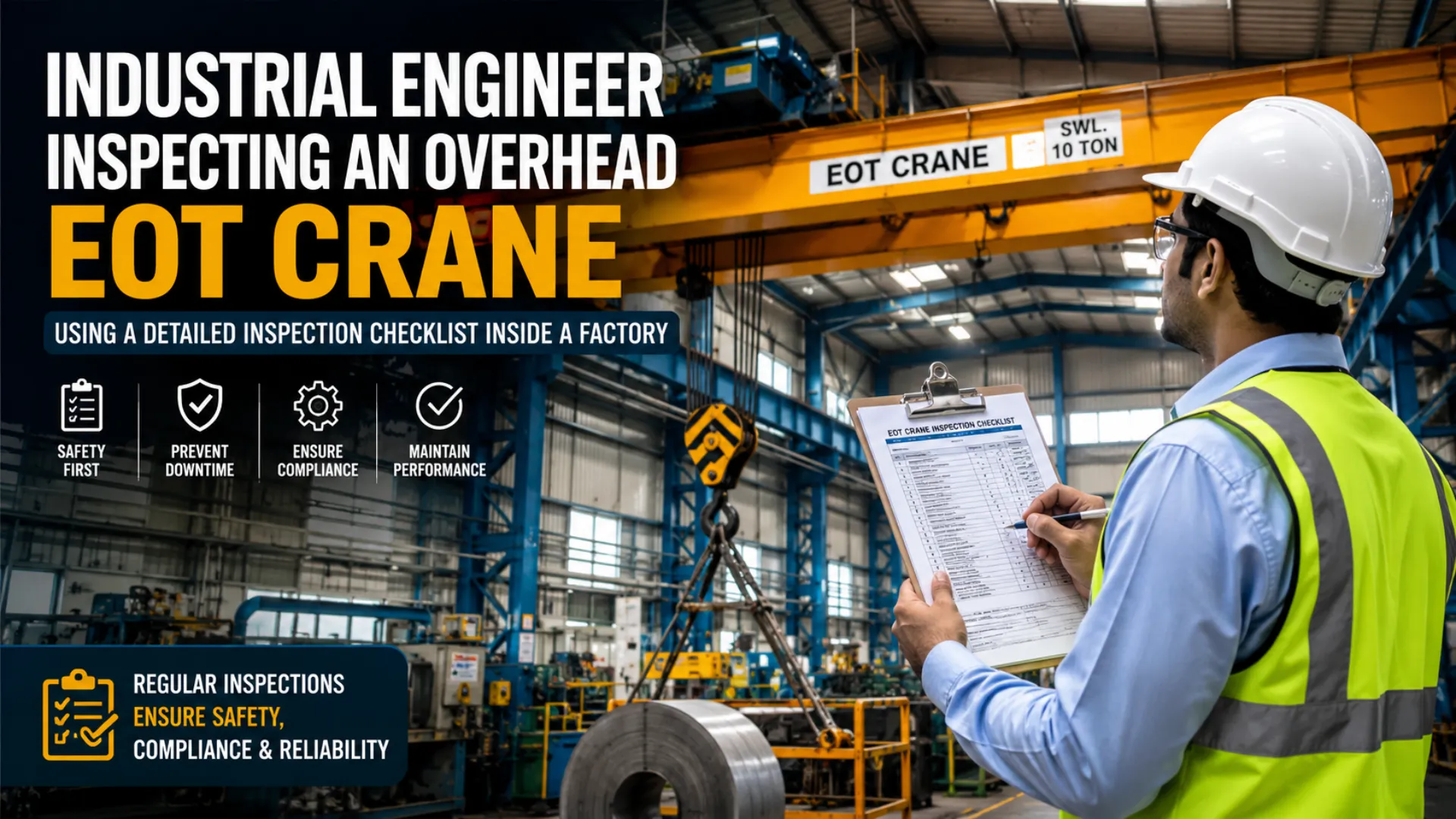
Electric Overhead Traveling (EOT) cranes are the backbone of material handling in factories, warehouses, power plants, steel industries, construction sites, and manufacturing facilities. These cranes are responsible for lifting and transporting heavy loads every day, making them one of the most critical pieces of equipment in industrial operations. Since they operate under constant stress, even a small defect can reduce performance, increase safety risks, or lead to costly downtime.
This is why annual EOT crane inspections are essential. A thorough inspection evaluates every major component of the crane, including its mechanical parts, electrical systems, structural members, safety devices, and lifting mechanisms. The goal is to identify signs of wear, damage, corrosion, misalignment, or malfunction before they turn into serious problems.
Finding defects early offers several important benefits. It helps prevent unexpected breakdowns, reduces expensive repair costs, improves equipment reliability, and, most importantly, protects workers from accidents caused by crane failure. Regular inspections also help businesses remain compliant with workplace safety regulations and industry standards while extending the overall lifespan of the crane.
During annual inspections, certified inspectors often come across a number of recurring issues. These can range from worn wire ropes and damaged hooks to brake failures, electrical faults, misaligned rails, structural cracks, and malfunctioning safety devices. Understanding these common EOT crane defects allows maintenance teams to take timely corrective action, ensuring the crane continues to operate safely, efficiently, and without unnecessary interruptions.
Understanding the Purpose of Annual EOT Crane Inspections
What Is an Annual Crane Inspection?
An annual EOT crane inspection is a detailed examination carried out by qualified professionals to check whether the crane is safe, reliable, and operating as intended. Unlike daily visual checks performed by operators or periodic inspections that focus on specific components, an annual inspection is much more comprehensive. It evaluates the crane’s structural parts, mechanical systems, electrical components, safety devices, and overall performance.
These inspections are often required to meet regulatory and workplace safety standards. Following the recommended inspection schedule helps businesses stay compliant while reducing the risk of accidents, unexpected equipment failures, and costly repairs. A professional inspection also provides documented records, which can be valuable during safety audits and compliance reviews.
Why Defect Detection Matters
Detecting defects early is one of the biggest advantages of an annual inspection. Small issues such as worn wire ropes, damaged hooks, loose bolts, brake wear, or electrical faults can quickly turn into serious safety hazards if left unnoticed.
Regular inspections help protect workers by identifying risks before they lead to accidents. They also improve equipment reliability, reduce unplanned downtime, and extend the crane’s service life. Most importantly, timely defect detection ensures the crane continues to meet industry safety standards, giving businesses greater confidence in their lifting operations while maintaining a safe and productive workplace.
Wire Rope Wear and Damage
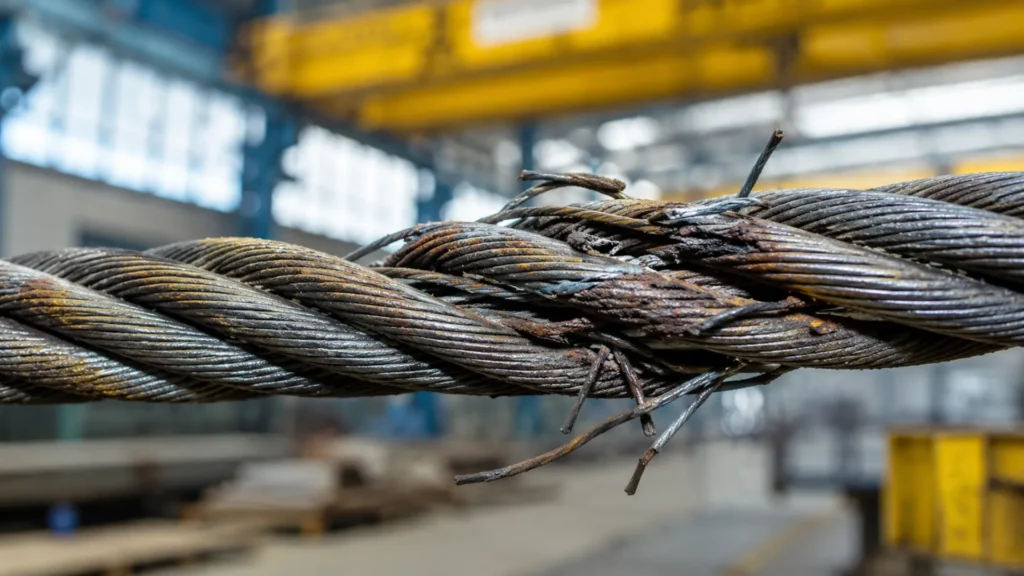
The wire rope is one of the most important parts of an EOT crane because it directly supports and lifts heavy loads. During annual inspections, it is carefully checked for signs of wear, damage, and deterioration. Even small defects can become serious safety risks if they are ignored.
Common Issues Found
Inspectors frequently come across several types of wire rope damage, including:
- Broken wire strands: Individual wires may snap over time due to repeated use, heavy loading, or metal fatigue.
- Corrosion and rusting: Exposure to moisture, chemicals, or harsh environments can weaken the rope and reduce its lifespan.
- Bird-caging: The strands separate and bulge outward, usually caused by sudden unloading or improper handling.
- Kinking and crushing: Incorrect winding, overloading, or poor storage can permanently deform the rope, making it unsafe for lifting.
Risks Associated with Damaged Wire Ropes
Using a damaged wire rope significantly increases the risk of workplace accidents. It can lead to:
- Load dropping hazards that endanger workers and equipment.
- Reduced lifting capacity, making the crane unreliable for heavy operations.
- Unexpected rope failures that may result in costly downtime and severe safety incidents.
Recommended Corrective Actions
If any of these defects are identified during an annual inspection, the damaged wire rope should be replaced immediately instead of being repaired. Regular lubrication, proper tension adjustment, correct drum winding, and routine visual inspections also help extend the rope’s service life and ensure the EOT crane continues to operate safely and efficiently.
2. Hook Defects and Deformation
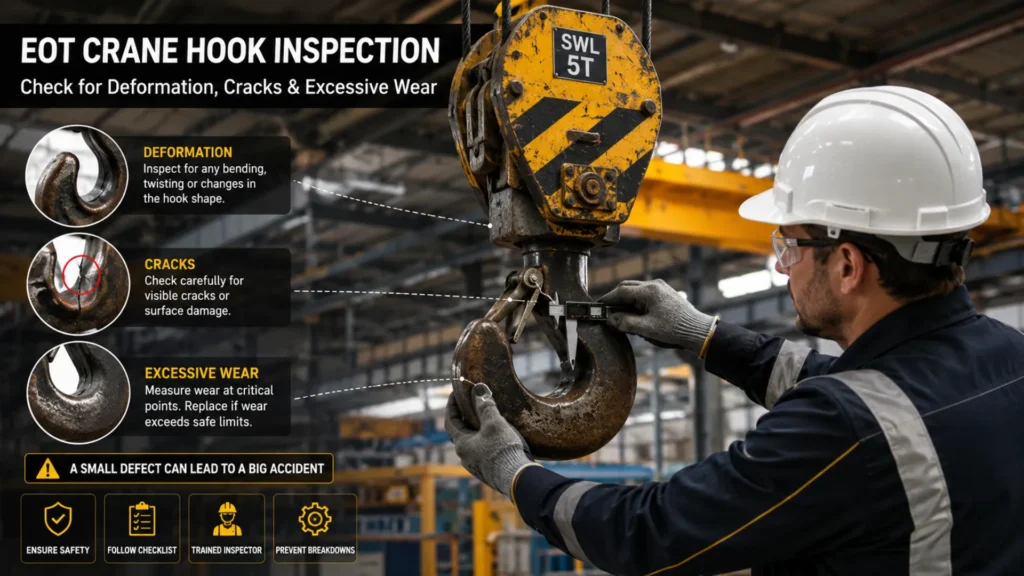
The crane hook is one of the most critical load-bearing components, so even a small defect can become a serious safety hazard if ignored. During an inspection, the hook should be checked carefully for any signs of damage, wear, or permanent deformation.
Some of the most common inspection findings include:
- Increased throat opening: If the hook opening becomes wider than the manufacturer’s allowable limit, it usually indicates that the hook has been overloaded and has permanently stretched.
- Hook twisting: A twisted hook shows that it has been subjected to side loading or improper lifting practices. This weakens the hook and affects safe load handling.
- Surface cracks: Cracks can develop due to repeated stress, fatigue, or impact damage. Even tiny cracks can grow over time and lead to sudden hook failure.
- Excessive wear: Wear on the saddle, shank, or load-bearing surfaces reduces the hook’s strength and safe working capacity.
These defects can lead to load instability, unexpected load movement, or complete hook failure under load, putting workers, equipment, and materials at serious risk.
A hook should be replaced immediately if it exceeds the allowable throat opening, shows visible cracks, has permanent twisting, or has wear beyond the manufacturer’s specified limits. Replacing a damaged hook is always safer and more cost-effective than risking a lifting accident.
3. Brake System Deficiencies
The brake system is one of the most important safety components of an EOT crane. Even a small issue with the brakes can increase the risk of accidents, especially when lifting heavy loads. Regular inspection and timely maintenance help ensure the crane stops smoothly and holds loads securely during operation.
Typical Problems
Some of the most common brake-related issues include:
- Worn brake linings: Over time, brake linings wear down due to continuous use. Excessive wear reduces braking efficiency and makes it difficult for the crane to stop or hold a suspended load safely.
- Improper brake adjustment: Brakes that are too loose or too tight can affect stopping performance. Incorrect adjustment may cause uneven braking, unnecessary wear, or poor load control.
- Oil contamination: Oil, grease, or other contaminants on brake surfaces reduce friction, making the brakes less effective. This can result from leaking hydraulic systems or poor maintenance practices.
Warning Signs
Operators and maintenance teams should pay close attention to these signs of brake problems:
- The suspended load begins to drift instead of remaining in position.
- The crane experiences delayed stopping or requires a longer distance to come to a complete stop.
Ignoring these warning signs can lead to equipment damage, dropped loads, or serious workplace accidents.
Recommended Maintenance Practices
To keep the brake system in reliable working condition, inspect brake linings regularly for wear, adjust brakes according to the manufacturer’s recommendations, and clean any oil or grease from braking surfaces immediately. Replacing worn components before they fail and including brake inspections in routine preventive maintenance will improve crane safety, reduce downtime, and extend the overall service life of the equipment.
4. Wheel, Rail, and Travel Mechanism Wear
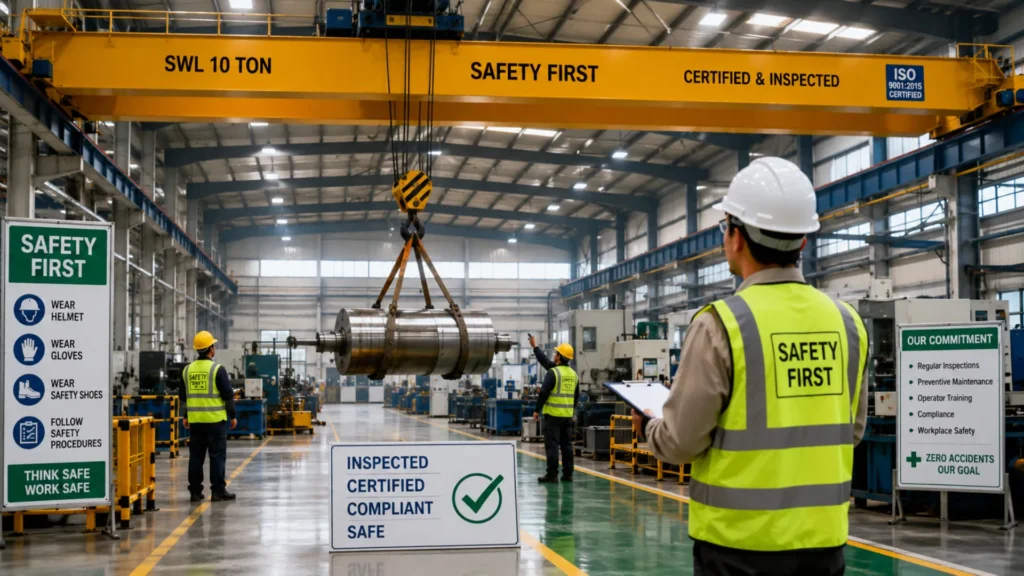
The wheels, rails, and travel mechanism play a major role in ensuring smooth and safe crane movement. Over time, these components are exposed to continuous friction, heavy loads, and harsh operating conditions, making regular inspection essential.
Common Defects
Some of the most common problems found during inspections include:
- Wheel flange wear, which reduces proper wheel guidance and increases the risk of derailment.
- Rail misalignment, causing the crane to travel unevenly and place additional stress on the structure.
- Uneven wheel wear, often resulting from incorrect wheel alignment or overloaded crane operation.
- Track damage, such as cracks, loose rail clips, dents, or worn rail surfaces that affect smooth movement.
Operational Impact
Ignoring these issues can lead to several operational problems, including:
- Crane skewing during travel, making load handling less accurate.
- Increased vibration and noise, reducing operator comfort and equipment stability.
- Premature failure of wheels, bearings, motors, gearboxes, and other travel components, leading to costly repairs and unexpected downtime.
Inspection and Repair Recommendations
Inspect wheel profiles, rail alignment, and track condition at regular intervals. Measure flange wear against manufacturer limits and replace excessively worn wheels when necessary. Repair damaged rails, tighten loose fasteners, and correct alignment issues promptly. Proper lubrication, scheduled maintenance, and periodic travel mechanism inspections help extend equipment life and ensure safe, reliable crane operation.
5. Structural Cracks and Girder Damage
The structural parts of an EOT crane carry the entire load during lifting operations, making them some of the most important components to inspect. Even small cracks or signs of damage can become serious problems if they are not identified and repaired early.
During an inspection, technicians carefully examine the main girders, end carriages, welded joints, and other load-bearing structures. These components are checked for visible cracks, bending, corrosion, loose welds, and any signs of deformation that could reduce the crane’s strength or stability.
Structural damage usually develops over time due to several factors. Metal fatigue is one of the most common causes, especially in cranes that handle frequent lifting cycles. Overloading beyond the crane’s rated capacity can also place excessive stress on the structure, while poor maintenance allows minor defects to worsen into major structural issues.
Ignoring structural cracks or damaged girders can have severe consequences. As the damage progresses, the crane’s ability to safely support heavy loads decreases, increasing the risk of structural failure. In the worst cases, this can result in dropped loads, equipment collapse, costly downtime, and major safety incidents that put workers and nearby operations at serious risk.
Regular structural inspections help detect these issues early, allowing repairs to be carried out before they become dangerous or expensive.
6. Electrical System Defects
The electrical system is the backbone of an EOT crane. Even a small electrical fault can interrupt operations, reduce productivity, and create serious safety risks if left unresolved. Regular inspections help identify these issues before they become major failures.
Common Electrical Issues
Some of the most common electrical defects found during crane inspections include:
- Damaged cables caused by constant movement, abrasion, heat, or aging insulation.
- Loose electrical connections that can lead to voltage drops, sparks, or unexpected equipment failures.
- Control panel faults, such as damaged relays, worn contactors, or malfunctioning circuit breakers that affect crane performance.
- Faulty limit switches that fail to stop crane movements at the correct position, increasing the risk of collisions or overtravel.
Signs of Electrical Problems
Electrical issues often show clear warning signs before a complete breakdown occurs. Watch for:
- Intermittent crane operation or controls that respond inconsistently.
- Unexpected shutdowns during lifting or travelling.
- Electrical overheating, burning smells, or unusually hot control panels and cables.
Preventive Measures
Routine inspection and preventive maintenance are the best ways to avoid electrical failures. Tighten loose connections, replace damaged cables, test limit switches regularly, and inspect the control panel for worn components. Keeping electrical systems clean, dry, and free from dust also improves reliability and helps ensure safe, uninterrupted crane operation.
7. Hoist and Gearbox Wear
The hoist and gearbox are among the hardest-working parts of an EOT crane. Since they handle the lifting mechanism, continuous use can gradually lead to wear and tear. During an inspection, these components are carefully checked to ensure they are operating smoothly and safely.
Frequent Findings
Some of the most common issues found during inspections include:
- Worn gears caused by long-term use or excessive loading.
- Bearing deterioration, which can create noise, friction, and overheating.
- Lubrication deficiencies due to old, contaminated, or insufficient lubricant.
- Excessive vibration, often indicating misalignment, damaged components, or internal wear.
Impact on Crane Performance
Ignoring hoist and gearbox problems can significantly affect crane performance. Worn components reduce lifting efficiency, make crane movements less smooth, and place additional stress on the motor and other mechanical parts. If left unaddressed, these issues often lead to unexpected breakdowns, costly repairs, and extended production downtime.
Maintenance Recommendations
Regular lubrication, routine gearbox inspections, vibration monitoring, and timely replacement of worn gears and bearings are essential for reliable operation. Following a preventive maintenance schedule helps extend equipment life, improve lifting performance, and reduce the risk of unexpected failures.
8. Limit Switch and Safety Device Failures
Safety devices are among the most important components of an EOT crane. During inspections, technicians often find problems with limit switches and other safety systems that can increase the risk of accidents if left unattended.
Common Inspection Observations
Some of the most common issues include:
- Faulty upper limit switches that fail to stop the hook before it reaches its maximum height, increasing the risk of wire rope damage or hook block collision.
- Travel limit switch malfunctions, allowing the crane or trolley to move beyond its safe operating range.
- Emergency stop button failures, where the system does not immediately shut down during an emergency.
- Warning alarm defects, such as non-functional sirens, lights, or hooters that fail to alert nearby workers before crane movement.
Why Safety Devices Matter
Every safety device on an EOT crane is designed to prevent serious accidents. Properly functioning limit switches help avoid collisions and protect the crane from over-travel, reducing damage to equipment. Emergency stop systems allow operators to react quickly in hazardous situations, while warning alarms improve awareness for workers in the surrounding area. Together, these components play a critical role in protecting both personnel and valuable assets.
Corrective Actions
Any defective safety device should be repaired or replaced immediately. After maintenance, all limit switches, emergency stop functions, and warning systems should be tested to confirm they operate correctly before the crane is returned to service. Regular inspection and functional testing help ensure long-term reliability and maintain a safe working environment.
What Causes These Defects to Develop?
EOT crane defects rarely appear overnight. In most cases, they develop gradually due to everyday operational and maintenance issues that are ignored for too long. Understanding these causes helps industries prevent unexpected breakdowns and expensive repairs.
Some of the most common contributing factors include:
- Overloading: Lifting loads beyond the crane’s rated capacity puts excessive stress on structural components, wire ropes, hooks, brakes, and motors. Over time, this leads to permanent damage and increases the risk of failure.
- Lack of preventive maintenance: Skipping routine inspections, lubrication, adjustments, and part replacements allows minor wear to grow into serious mechanical or electrical problems.
- Harsh operating environments: Exposure to dust, moisture, chemicals, extreme temperatures, or corrosive conditions speeds up the deterioration of crane components and electrical systems.
- Operator misuse: Sudden starts and stops, improper lifting techniques, side pulling, and operating the crane without following safety procedures place unnecessary strain on the equipment.
- Aging crane components: Every crane has parts that naturally wear out over time. If these components are not replaced at the right intervals, reliability and safety begin to decline.
Small defects such as loose bolts, worn brake linings, or damaged wire ropes may seem insignificant at first. However, if left unattended, they can quickly develop into major failures that result in costly downtime, equipment damage, and serious safety hazards. Regular inspections and timely maintenance are the best way to stop these problems before they become critical.
Warning Signs That Indicate an Immediate Inspection Is Needed
An overhead crane usually gives clear warning signs before a major problem develops. Ignoring these signs can lead to equipment damage, costly downtime, or even serious workplace accidents. If you notice any of the following issues, arrange an inspection immediately and avoid continuing normal operations until the problem has been identified.
Some of the most common warning signs include:
- Unusual noises: Grinding, squealing, knocking, or scraping sounds may indicate worn bearings, damaged gears, or insufficient lubrication.
- Excessive vibration: Strong vibrations during lifting or travel often point to mechanical wear, loose components, or alignment issues.
- Load drifting: If the load slowly moves down when the controls are released, the brake system may be worn or malfunctioning.
- Jerky crane movement: Sudden or uneven movement can result from motor, gearbox, or control system problems.
- Frequent electrical trips: Repeated breaker trips or electrical faults may signal wiring issues, motor overload, or failing electrical components.
If any of these symptoms appear, stop operating the crane immediately. Continuing to use a faulty crane increases the risk of accidents and may cause more extensive damage. A qualified inspection should always be carried out before the crane is returned to service.
Best Practices to Prevent EOT Crane Defects
The best way to avoid expensive repairs and unexpected breakdowns is to prevent problems before they happen. A proactive maintenance plan keeps your EOT crane operating safely, extends its service life, and reduces the risk of accidents.
Preventive Maintenance Strategies
Regular preventive maintenance should be part of every facility’s maintenance schedule. Instead of waiting for a fault to occur, inspect, clean, adjust, and service crane components at planned intervals. This approach helps identify small issues before they become major failures.
Scheduled Inspections
Carry out routine visual checks along with detailed monthly, quarterly, and annual inspections. Regular inspections help detect wear, corrosion, loose fasteners, misalignment, and electrical problems at an early stage.
Proper Lubrication Programs
Lubricate gears, bearings, wire ropes, sheaves, and moving parts using the manufacturer’s recommended lubricant. Proper lubrication reduces friction, minimizes wear, and improves the overall efficiency of the crane.
Operator Training
Well-trained operators are less likely to misuse equipment. They understand safe lifting practices, perform pre-operation checks, recognize warning signs, and report unusual noises or performance issues immediately.
Load Management
Never exceed the crane’s rated load capacity. Ensure loads are balanced, lifted smoothly, and moved carefully to reduce unnecessary stress on structural and mechanical components.
Timely Component Replacement
Replace worn wire ropes, hooks, brakes, limit switches, bearings, and electrical parts before they fail. Delaying replacement often leads to more extensive damage and higher repair costs.
Benefits of a Proactive Maintenance Approach
A proactive maintenance program improves workplace safety, reduces downtime, lowers maintenance expenses, increases equipment reliability, and helps businesses stay compliant with industry safety standards. Consistent care also maximizes the lifespan and performance of your EOT crane, ensuring dependable operation for years to come.
Annual EOT Crane Inspection Checklist: Key Areas to Review
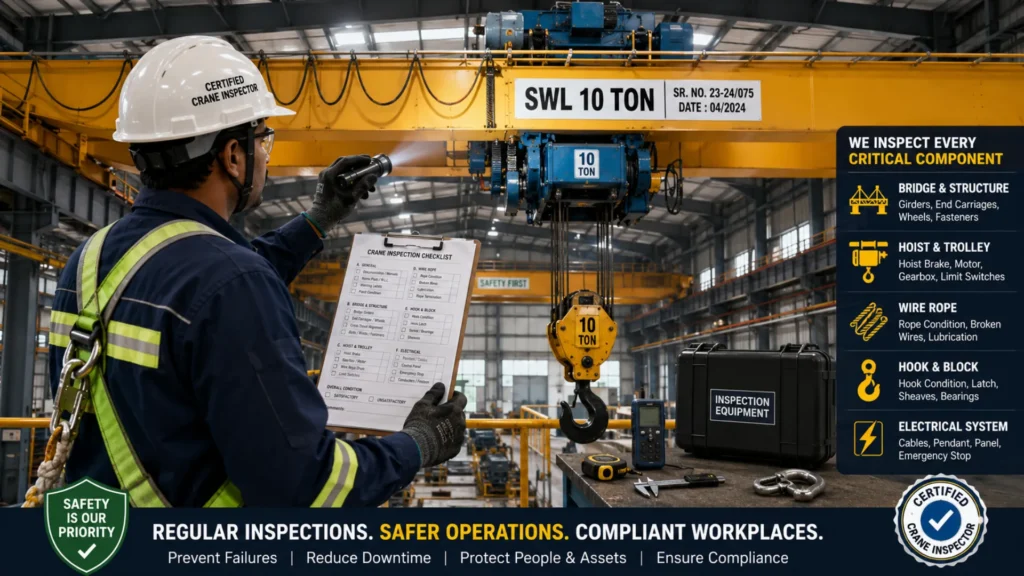
A thorough annual EOT crane inspection helps identify wear, damage, and safety risks before they become serious problems. During the inspection, technicians carefully examine the following critical components:
- Wire ropes: Check for broken strands, corrosion, kinks, excessive wear, and proper lubrication.
- Hooks: Inspect for cracks, deformation, excessive throat opening, and secure safety latches.
- Brakes: Ensure braking systems respond quickly and stop the crane safely under load.
- Electrical systems: Test control panels, wiring, limit switches, motors, and emergency stop functions.
- Structural components: Look for cracks, corrosion, loose bolts, bent sections, and damaged welds.
- Safety devices: Verify overload protection, warning alarms, limit switches, and other safety features are working correctly.
- Travel mechanisms: Inspect wheels, rails, gears, bearings, and drive systems for smooth, reliable operation.
Accurate documentation is equally important. Maintaining detailed inspection reports, repair records, and maintenance history supports legal compliance, simplifies future inspections, and helps track the overall condition and performance of the crane throughout its service life.
Conclusion
Regular annual crane inspections are one of the most effective ways to keep lifting equipment safe, reliable, and compliant with industry standards. During these inspections, professionals often discover issues such as worn wire ropes, brake wear, hook deformation, structural cracks, electrical faults, and excessive wheel or rail wear. Identifying these problems early helps prevent unexpected breakdowns, costly repairs, and workplace accidents.
Beyond meeting legal and safety requirements, routine inspections also improve equipment performance, reduce downtime, and extend the overall service life of the crane. Professional inspectors have the experience and specialized tools needed to detect defects that may not be visible during daily checks.
The best approach is to schedule annual inspections on time and repair any identified defects without delay. Taking preventive action today can protect your workforce, improve operational efficiency, and save your business from expensive failures in the future.