 trivedi associate June 25, 2026
EOT (Electric Overhead Traveling) cranes are widely used in manufacturing, warehousing, construction, and logistics to lift and transport heavy materials safely and efficiently. Because these cranes handle critical operations, regular inspections are essential to prevent workplace accidents, reduce costly downtime, and meet safety regulations.
A thorough inspection also helps identify wear and potential failures before they become serious problems, improving equipment reliability and lifespan. In this guide, you’ll learn about the different types of EOT crane inspections, a complete inspection checklist, common defects to watch for, and maintenance best practices to ensure safe, reliable, and efficient crane operation.
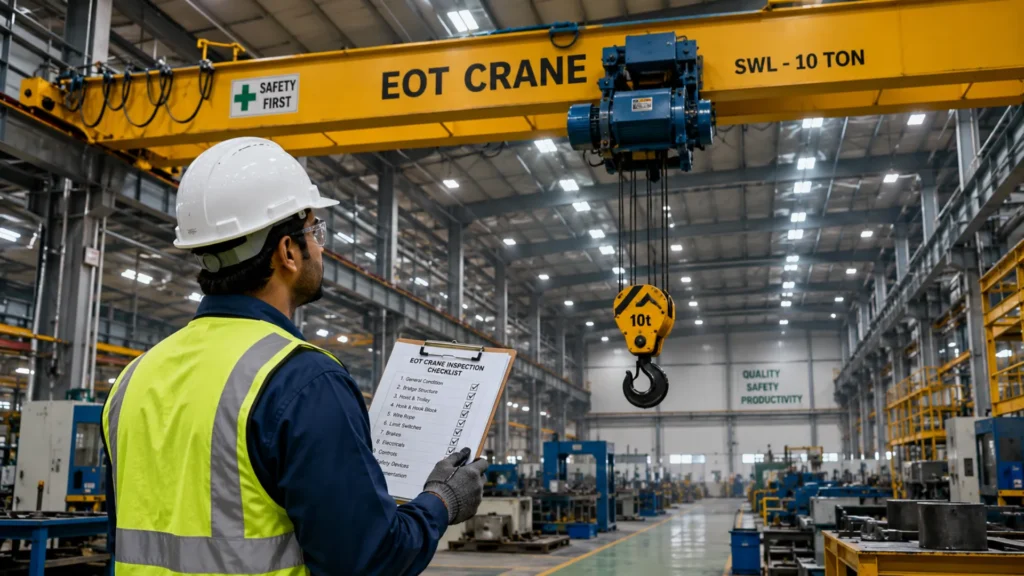
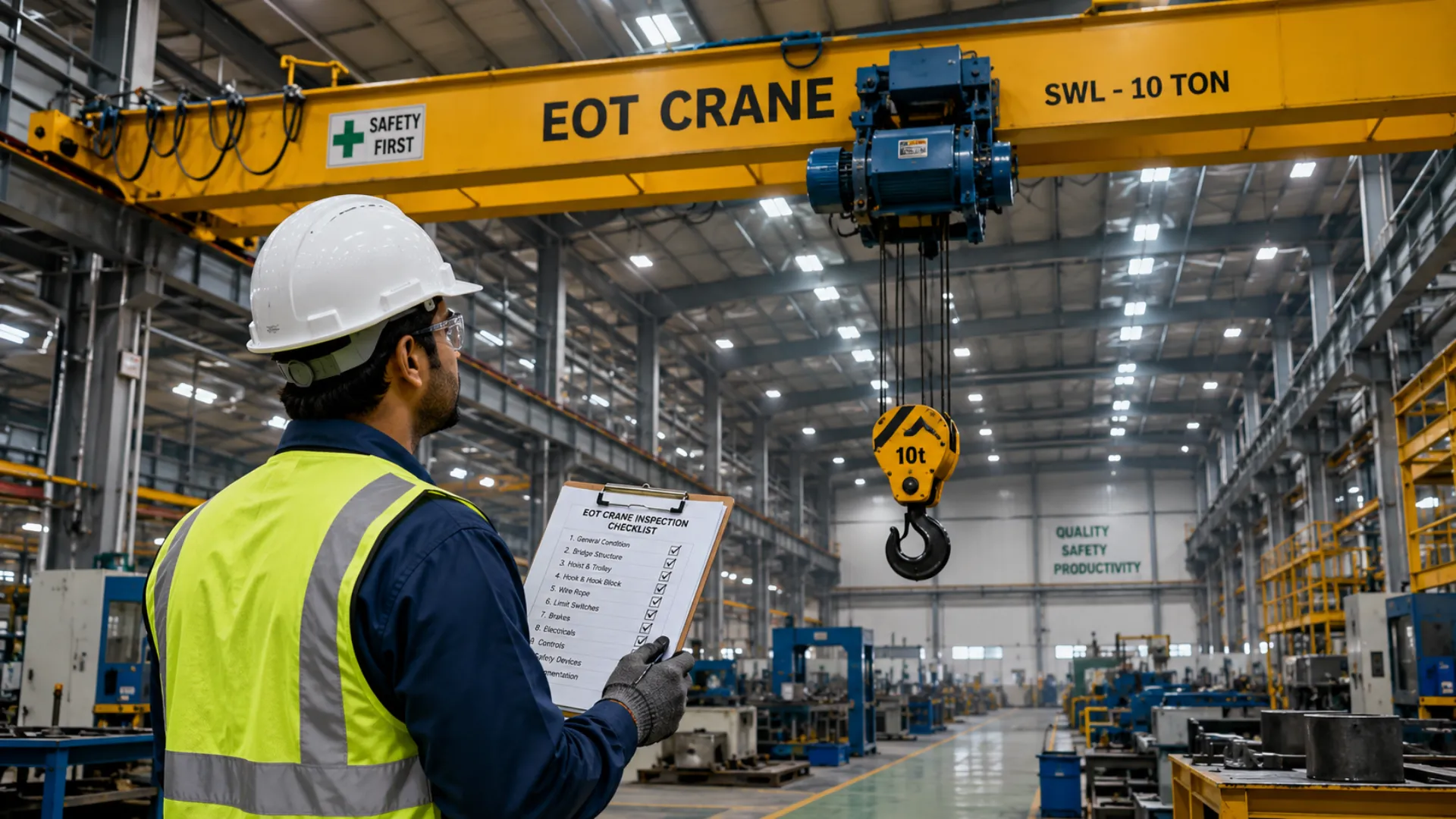
An engineer performs a detailed EOT crane inspection to ensure safe, efficient, and compliant lifting operations.
What Is an EOT Crane?
Understanding EOT Cranes
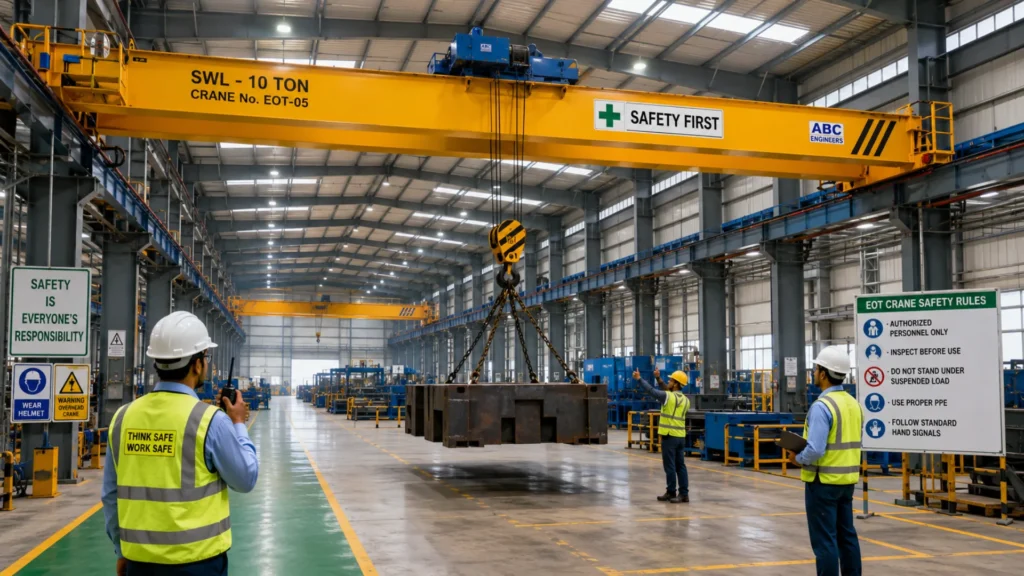
An Electric Overhead Traveling (EOT) crane is a material handling system used to lift, move, and position heavy loads within industrial facilities. It travels on overhead rails, allowing materials to be transported safely without taking up valuable floor space. EOT cranes are powered by electricity and are commonly operated using a pendant controller, remote control, or cabin controls.
The crane works by combining three main movements: the hoist lifts and lowers the load, the trolley moves the load horizontally across the bridge, and the bridge travels along runway beams to cover the required work area. This design makes material handling faster, safer, and more efficient.
Common Types of EOT Cranes
The most common types of EOT cranes include:
- Single Girder EOT Crane – Best for light to medium-duty lifting tasks.
- Double Girder EOT Crane – Designed for heavy loads and higher lifting heights.
- Top Running Crane – Runs on rails mounted above the runway beams, offering maximum lifting capacity.
- Under Running Crane – Suspended below the runway, making it suitable for buildings with limited headroom.
Industries That Use EOT Cranes
EOT cranes are widely used in manufacturing plants, steel industries, warehouses, power plants, and construction projects where safe and efficient movement of heavy materials is essential.
Why Regular EOT Crane Inspection Is Essential
Regular EOT crane inspection is not just a recommended practice—it is a crucial part of maintaining a safe, efficient, and compliant industrial workplace. Routine inspections help identify potential problems before they become serious, reducing the risk of accidents, costly repairs, and unexpected production delays.
Improving Workplace Safety
One of the biggest reasons for conducting regular EOT crane inspections is to improve workplace safety. A crane that is in good condition protects both operators and nearby workers by reducing the chances of mechanical failures during lifting operations.
Regular inspections also help prevent dangerous situations such as load drops, broken wire ropes, faulty brakes, or structural failures. Identifying these issues early creates a safer working environment and minimizes the risk of injuries and property damage.
Ensuring Regulatory Compliance
Industries are required to follow established safety standards and inspection regulations for lifting equipment. Routine EOT crane inspections help businesses stay compliant with these requirements and avoid penalties or legal complications.
Maintaining proper inspection records and documentation also demonstrates that the equipment has been regularly checked and maintained, which is often necessary during safety audits and regulatory inspections.
Extending Equipment Life
Regular inspections allow maintenance teams to detect wear, corrosion, loose components, and damaged parts before they cause major failures. Replacing or repairing these components at an early stage helps extend the overall lifespan of the crane.
Preventive maintenance also reduces the need for expensive emergency repairs, helping businesses lower their long-term maintenance costs.
Minimizing Downtime
Unexpected crane breakdowns can stop production and disrupt daily operations. Regular inspections help identify potential issues before they lead to equipment failure, allowing maintenance to be scheduled at convenient times.
This preventive approach improves operational efficiency, reduces downtime, and ensures that the EOT crane remains reliable for continuous industrial operations.
Types of EOT Crane Inspections
Regular inspections help identify wear, damage, and potential safety risks before they become serious problems. Different inspection schedules focus on different aspects of the crane to ensure safe and efficient operation.
Daily Visual Inspection
A daily visual inspection is carried out before operating the crane. It includes checking hooks, wire ropes, chains, controls, warning devices, and looking for any visible signs of damage, leaks, or unusual wear. Operators should also ensure there are no obstructions in the crane’s working area.
Weekly Inspection
Weekly inspections involve basic functional and mechanical checks. This includes testing brakes, limit switches, travel mechanisms, hoists, and electrical controls to confirm that all systems are operating correctly.
Monthly Inspection
Monthly inspections are more detailed and focus on critical components such as wire ropes, sheaves, gears, bearings, motors, electrical panels, and structural connections. Any signs of excessive wear or damage should be repaired immediately.
Annual Inspection
An annual inspection is a comprehensive assessment performed by qualified professionals. It evaluates the crane’s structural integrity, safety systems, electrical components, and overall compliance with industry standards.
Load Testing Inspection
Load testing verifies that the EOT crane can safely lift and move its rated capacity under controlled conditions. This inspection confirms the crane’s performance, stability, and operational safety before it is used for regular lifting tasks.
Complete EOT Crane Inspection Checklist
A thorough EOT crane inspection helps identify wear, damage, and safety risks before they become major problems. Inspecting every critical component on a regular basis improves equipment reliability, extends service life, and ensures compliance with workplace safety standards.
1. Structural Components Inspection
The structural frame is the backbone of an EOT crane, making it one of the first areas that should be inspected.
Check the bridge girders for bending, dents, or any visible signs of structural damage that could affect load-bearing capacity. Inspect the end trucks to ensure they are properly aligned and securely connected to the bridge. Examine the runway beams for excessive wear, loose fasteners, or misalignment that could interfere with smooth crane movement.
Pay close attention to all weld joints. Even small cracks or separation in welds can become serious structural failures if left unattended. Inspect every exposed metal surface for corrosion, rust, paint damage, or fatigue cracks. These issues can weaken the crane over time, especially in humid or corrosive industrial environments.
Any structural defect should be documented and repaired immediately before the crane is returned to service.
2. Hoist and Lifting Mechanism Inspection
The hoist system performs the actual lifting, so every component must operate safely and efficiently.
Inspect wire ropes for broken strands, flattened sections, corrosion, bird-caging, or excessive wear. Damaged wire ropes should be replaced immediately because they directly affect lifting safety. If the crane uses chains, check for stretched links, corrosion, cracks, and uneven wear.
Carefully inspect the hook for cracks, deformation, twisting, or an enlarged throat opening. Hooks that fail inspection should never be used for lifting operations.
Examine the rope drums for proper rope winding, damaged grooves, or excessive wear that may shorten rope life. Inspect pulley systems to ensure the sheaves rotate smoothly without excessive wear or misalignment. Proper lubrication and smooth movement of all lifting components help reduce stress on the hoisting mechanism and improve operational safety.
3. Mechanical Components Inspection
Mechanical components ensure smooth and controlled crane operation.
Inspect the brakes to confirm they stop loads safely without slipping or delayed response. Check bearings for excessive heat, unusual noise, vibration, or signs of wear. Inspect couplings for alignment issues, cracks, or loose connections that may affect power transmission.
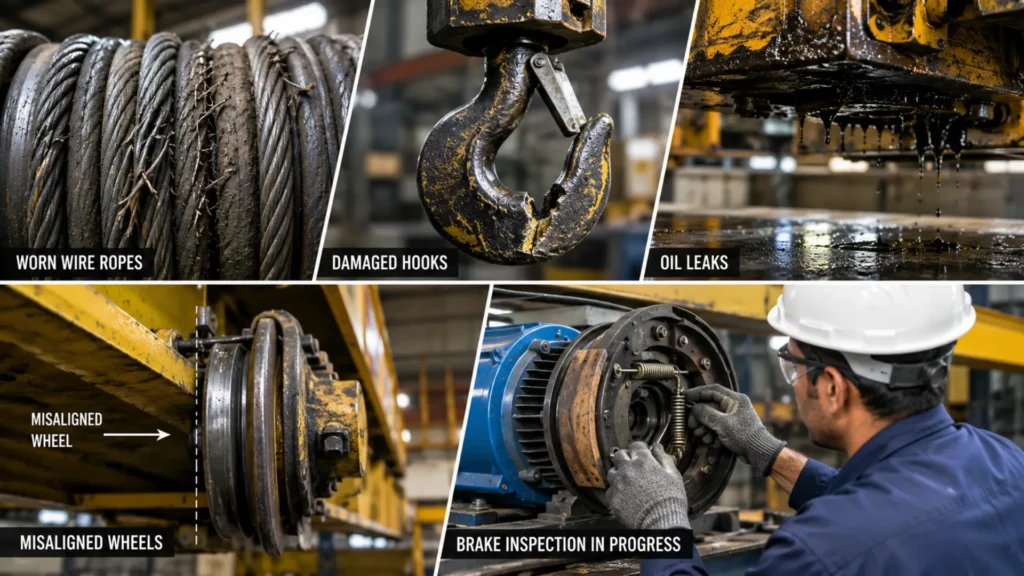
The gearboxes should be examined for oil leaks, unusual sounds, overheating, and worn gears. Verify that all moving parts receive proper lubrication according to the manufacturer’s recommendations. Insufficient lubrication increases friction, accelerates wear, and may result in costly mechanical failures.
4. Electrical System Inspection
A reliable electrical system is essential for safe crane operation.
Inspect control panels for loose components, overheating, damaged relays, or signs of moisture. Check all wiring and electrical connections for wear, exposed insulation, loose terminals, or corrosion that could cause electrical faults.
Test the emergency stop system to ensure it immediately shuts down crane operations when activated. Verify that all limit switches function correctly to prevent over-travel or over-hoisting. Finally, inspect the power supply system, including cables and connectors, to ensure a stable electrical supply without overheating or voltage fluctuations.
5. Safety Device Inspection
Safety devices protect both workers and equipment during crane operation.
Test the overload protection system to confirm it prevents lifting loads beyond the crane’s rated capacity. Verify that warning alarms and indicator lights function correctly so nearby personnel receive clear safety alerts.
Inspect anti-collision systems, especially where multiple cranes operate on the same runway. These systems help prevent equipment collisions and reduce the risk of costly accidents. Also test all safety interlocks to ensure crane operations stop whenever safety conditions are not met. Every safety device should be fully operational before the crane is used.
6. Operational Performance Inspection
A complete inspection should always include a functional performance test.
Operate the crane through its full range of motion and observe hoist movement for smooth lifting and lowering without jerking or hesitation. Check trolley travel to ensure it moves evenly across the bridge without unusual resistance.
Inspect bridge travel along the runway and confirm smooth acceleration, braking, and alignment. Listen for abnormal sounds such as grinding, knocking, or squealing, and monitor for excessive vibration during operation. Finally, verify that all operator controls respond accurately and without delay. Responsive controls improve productivity while reducing operational risks.
Common Problems Found During EOT Crane Inspections
Routine inspections often reveal issues that develop gradually through regular use. Identifying these problems early helps prevent unexpected breakdowns, expensive repairs, and workplace accidents.
One of the most common findings is wire rope wear and damage. Fraying, broken strands, corrosion, or flattened sections reduce lifting strength and increase the risk of rope failure.
Another frequent issue is hook deformation. Cracks, twisting, or excessive throat opening indicate that the hook has been overloaded or has reached the end of its service life. Damaged hooks should always be replaced.
Brake malfunctions are also common. Worn brake linings or improperly adjusted braking systems reduce stopping efficiency, making crane operations less safe.
Inspectors also regularly identify electrical issues, including loose wiring, damaged insulation, faulty switches, worn contactors, or poor electrical connections. These problems can lead to unexpected shutdowns or control failures.
Finally, structural defects such as corrosion, beam misalignment, loose bolts, and fatigue cracks can weaken the crane over time. Immediate corrective action prevents further deterioration and helps maintain safe lifting operations.
Recommended EOT Crane Inspection Schedule
Following a structured inspection schedule helps detect problems before they become serious. Regular inspections improve equipment reliability, reduce downtime, and ensure compliance with workplace safety requirements.
| Component | Daily | Weekly | Monthly | Annual |
|---|---|---|---|---|
| Hook | ✓ | ✓ | ✓ | ✓ |
| Wire Rope | ✓ | ✓ | ✓ | ✓ |
| Brakes | ✓ | ✓ | ✓ | |
| Electrical System | ✓ | ✓ | ✓ | |
| Structural Components | ✓ | ✓ | ||
| Load Testing | ✓ |
Consistently following this inspection schedule improves safety compliance, extends crane lifespan, reduces emergency repair costs, and helps identify wear before it develops into major equipment failures.
Best Practices for EOT Crane Maintenance and Inspection
A well-planned maintenance program keeps EOT cranes operating safely while reducing long-term operating costs. Following industry best practices also helps organizations meet safety regulations and improve equipment reliability.
Provide regular operator training so crane operators understand safe lifting techniques, inspection procedures, load limits, and emergency response protocols. Well-trained operators are more likely to identify problems before they become serious.
Maintain detailed inspection records for every crane. Keeping accurate documentation makes it easier to track equipment history, identify recurring issues, schedule preventive maintenance, and demonstrate regulatory compliance during audits.
Always follow the manufacturer’s guidelines when inspecting, lubricating, adjusting, or replacing crane components. Different crane models have specific maintenance requirements that should never be overlooked.
Implement a preventive maintenance program with scheduled servicing and predictive maintenance techniques such as vibration analysis or thermal inspections. These methods help detect hidden problems before equipment failure occurs.
Most importantly, address issues immediately. Small defects such as loose bolts, worn brakes, damaged wire ropes, or faulty electrical connections can quickly develop into major failures if ignored. Prompt repairs improve safety, reduce downtime, and extend the overall life of the crane.
Signs Your EOT Crane Needs Immediate Inspection
Even if your EOT crane appears to be working normally, certain warning signs should never be ignored. Identifying these issues early can help prevent costly repairs, unexpected downtime, and serious workplace accidents.
Warning Signs to Watch For
Look out for these common indicators that your crane requires immediate inspection:
- Unusual noises: Grinding, squealing, or knocking sounds may indicate worn-out gears, bearings, or other mechanical components.
- Excessive vibration: Strong vibrations during operation can point to alignment problems, loose parts, or structural wear.
- Jerky movements: Sudden starts, stops, or uneven lifting often suggest issues with the motor, controls, or drive system.
- Load handling issues: Difficulty lifting, lowering, or moving loads safely is a clear sign that the crane needs professional attention.
- Visible structural damage: Cracks, corrosion, bent beams, or damaged hooks should be inspected without delay.
- Frequent electrical faults: Repeated power failures, control malfunctions, or tripping circuits may indicate electrical system problems.
Why Immediate Action Is Important
Ignoring these warning signs can lead to equipment failure, workplace injuries, and costly production interruptions. Scheduling a prompt EOT crane inspection helps ensure safe operations, extends equipment life, and keeps your business running efficiently.
Benefits of Professional EOT Crane Inspection Services
Hiring professional EOT crane inspection services is one of the best ways to keep your lifting equipment safe, reliable, and compliant with industry standards. Certified inspectors have the knowledge and experience to identify issues that may be missed during routine visual checks.
Expert Assessment
Professional inspectors perform a detailed evaluation of all critical crane components, including the hoist, wire ropes, hooks, brakes, electrical systems, and structural parts. Their expertise helps detect wear, damage, or hidden defects before they become serious problems.
Compliance Assurance
Regular inspections ensure your crane meets all applicable safety regulations and industry standards. Staying compliant not only protects workers but also helps avoid legal issues, penalties, and operational disruptions.
Reduced Risk and Liability
A properly inspected crane is much less likely to experience unexpected failures. This reduces the risk of workplace accidents, equipment damage, and potential liability for your business.
Long-Term Cost Savings
Professional inspections help identify small issues before they turn into expensive repairs or major breakdowns. Preventive maintenance extends the crane’s service life, reduces downtime, and lowers overall operating costs.
Conclusion
Regular EOT crane inspections are essential for maintaining a safe, efficient, and legally compliant workplace. Following a structured inspection checklist helps detect wear, damage, and potential faults before they become serious problems, reducing the risk of accidents and costly equipment failures.
In addition to improving safety, preventive inspections extend the service life of the crane, minimize unplanned downtime, and lower long-term maintenance expenses. A well-documented inspection program also makes it easier to meet regulatory requirements and demonstrate compliance during audits.
To ensure reliable EOT crane operations, establish a consistent inspection schedule, maintain detailed inspection records, and work with experienced inspection professionals. Taking a proactive approach today will help protect your workforce, improve productivity, and keep your lifting equipment operating safely for years to come.