 trivedi associate June 25, 2026
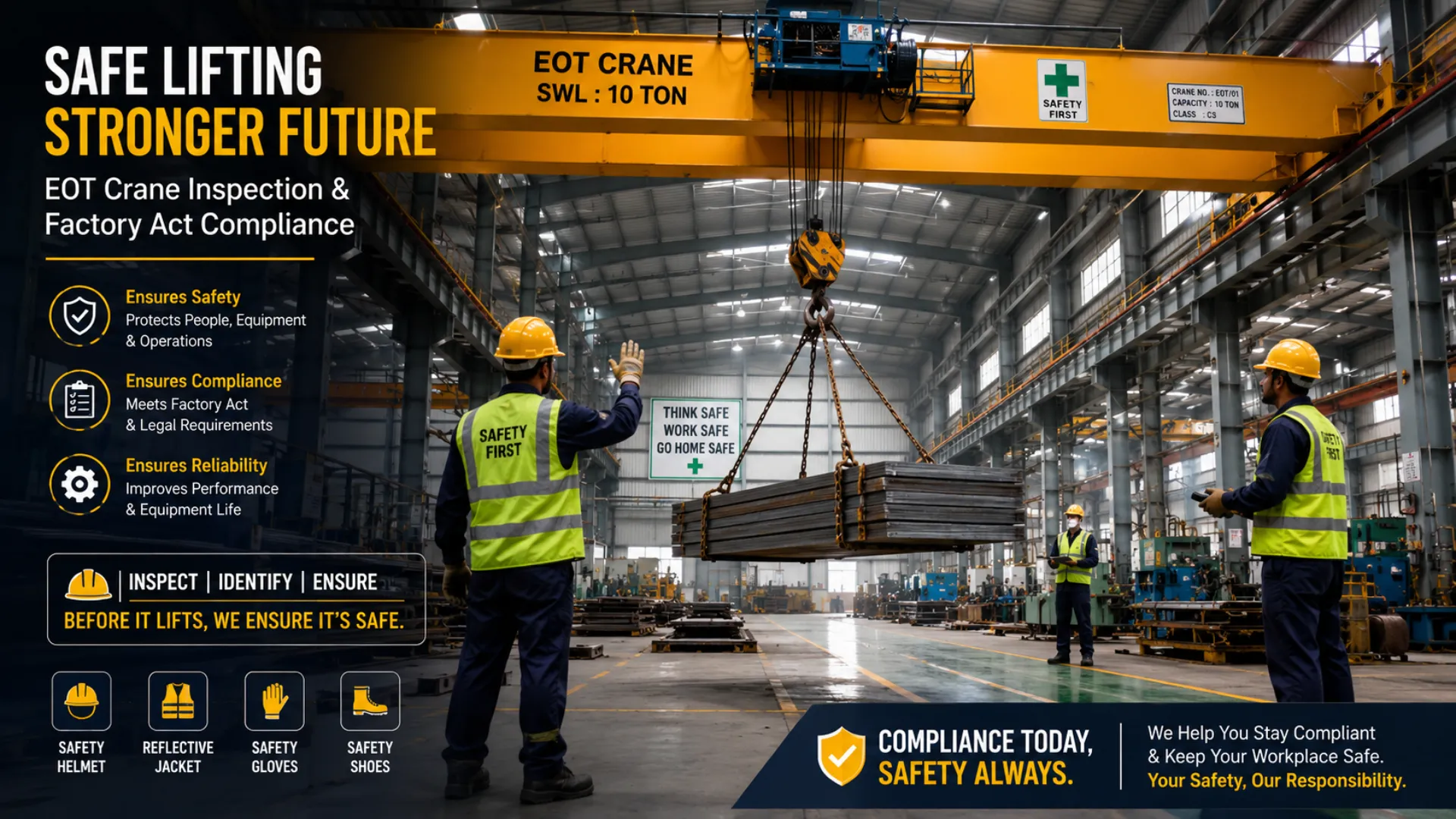
Electric Overhead Travelling (EOT) cranes are an essential part of daily operations in factories, warehouses, manufacturing plants, steel industries, power plants, and construction facilities. They help move heavy materials quickly, improve productivity, and reduce the need for manual handling. As industries continue to automate their material handling processes, the use of EOT cranes has grown significantly.
However, with heavy lifting comes serious responsibility. A poorly maintained or damaged crane can lead to equipment failure, dropped loads, production downtime, costly repairs, and, most importantly, severe injuries or even loss of life. Many crane-related accidents occur because inspections are delayed, maintenance is ignored, or hidden defects go unnoticed.
This is why regular EOT crane inspections are not just a recommended practice—they are a critical part of workplace safety and legal compliance. Routine inspections help identify wear and tear before it becomes a major problem, ensuring that the crane operates safely and efficiently while protecting both workers and valuable equipment.
What This Guide Covers
In this guide, you’ll learn how often EOT cranes should be inspected under the Factory Act, the different types of crane inspections required, the legal responsibilities of factory owners and employers, and the best practices that help maintain compliance while improving safety, reliability, and operational performance.
What Is an EOT Crane?
Understanding EOT Cranes
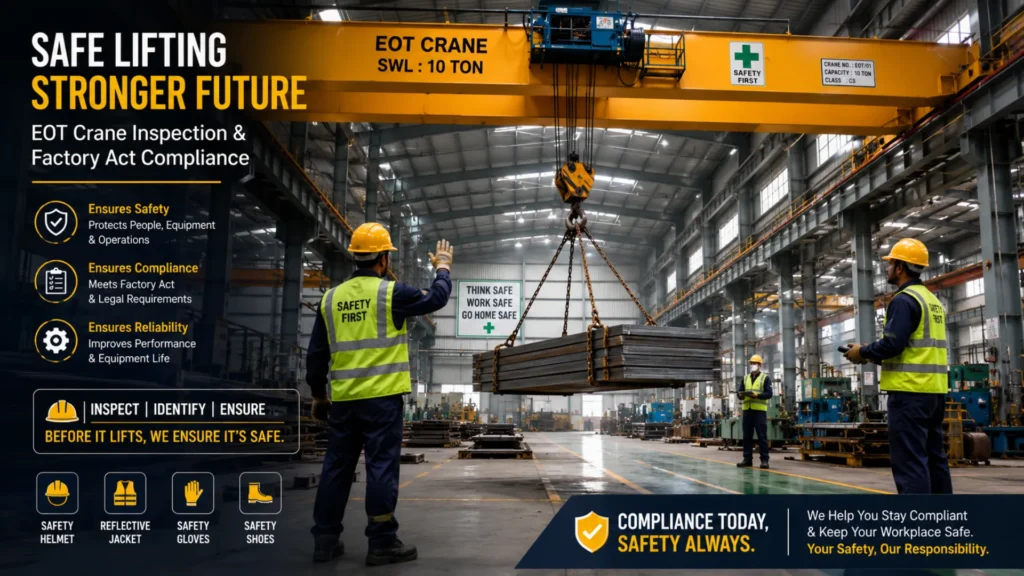
An Electric Overhead Traveling (EOT) crane is a heavy-duty lifting system used to move materials safely and efficiently within industrial facilities. It operates on overhead rails, allowing loads to travel across the length and width of a building without occupying valuable floor space. EOT cranes are designed to lift and transport heavy equipment, raw materials, and finished products with precision.
The main components of an EOT crane include the bridge, hoist, trolley, end trucks, runway rails, and the electrical control system. Each part works together to ensure smooth, controlled lifting and movement of heavy loads.
EOT cranes are widely used in manufacturing plants, steel and metal industries, warehouses, logistics centers, power plants, and engineering units where heavy material handling is a daily requirement.
Because these cranes regularly lift large and valuable loads, they are exposed to continuous stress, friction, and wear. Without regular inspection, worn components or hidden defects can increase the risk of equipment failure, workplace accidents, costly downtime, and damage to both personnel and property.
Why Are EOT Crane Inspections Mandatory Under the Factory Act?
Regular EOT crane inspections are not just a recommended safety practice—they are a legal requirement under the Factory Act. Every factory owner is responsible for ensuring that lifting equipment is safe, properly maintained, and fit for operation. Ignoring inspection requirements can lead to legal penalties, costly repairs, and, most importantly, serious workplace accidents.
Legal Responsibility of Factory Owners
Factory owners have a duty to provide a safe working environment for employees. This includes ensuring that EOT cranes are inspected at regular intervals and comply with all applicable factory safety regulations. Routine inspections help identify potential issues before they become major safety risks and demonstrate that the organization is meeting its legal obligations.
Worker Safety and Accident Prevention
One of the main reasons inspections are mandatory is to protect workers. Cranes handle heavy loads every day, and even a small mechanical fault can result in dropped loads, structural failures, or equipment collapse. Regular inspections reduce workplace hazards, detect wear and tear early, and help prevent crane-related accidents that could cause injuries or fatalities.
Protecting Equipment and Productivity
Well-maintained cranes perform more efficiently and experience fewer unexpected breakdowns. Scheduled inspections allow maintenance teams to address minor issues before they lead to expensive repairs or long periods of downtime. This not only extends the crane’s service life but also helps maintain smooth production and uninterrupted operations.
Importance of Documentation and Certification
Inspection reports and certification records are essential for proving compliance during safety audits and regulatory inspections. Proper documentation demonstrates that the crane has been examined by qualified professionals, helping businesses meet legal requirements while building confidence in their workplace safety standards.
How Often Should EOT Cranes Be Inspected Under Factory Act?
Regular inspection of an EOT crane is not just a recommended maintenance activity—it is a legal requirement under the Factory Act and related state factory rules. These inspections help ensure that cranes remain safe to operate, reduce the risk of workplace accidents, and improve the overall reliability of lifting equipment.
Statutory Inspection Requirements
The Factory Act requires lifting equipment, including EOT cranes, to undergo inspections at specified intervals. While the exact inspection schedule may vary depending on the state and the type of crane, every organization is responsible for ensuring that its cranes remain in safe working condition.
Routine inspections are important because they help identify wear, damage, loose components, or mechanical issues before they become serious safety hazards. Regular examinations also demonstrate compliance during audits and inspections by regulatory authorities.
Annual Thorough Examination
A detailed inspection should be carried out at least once every year by a competent person. This annual thorough examination is more comprehensive than routine daily or monthly inspections and focuses on the overall condition of the crane.
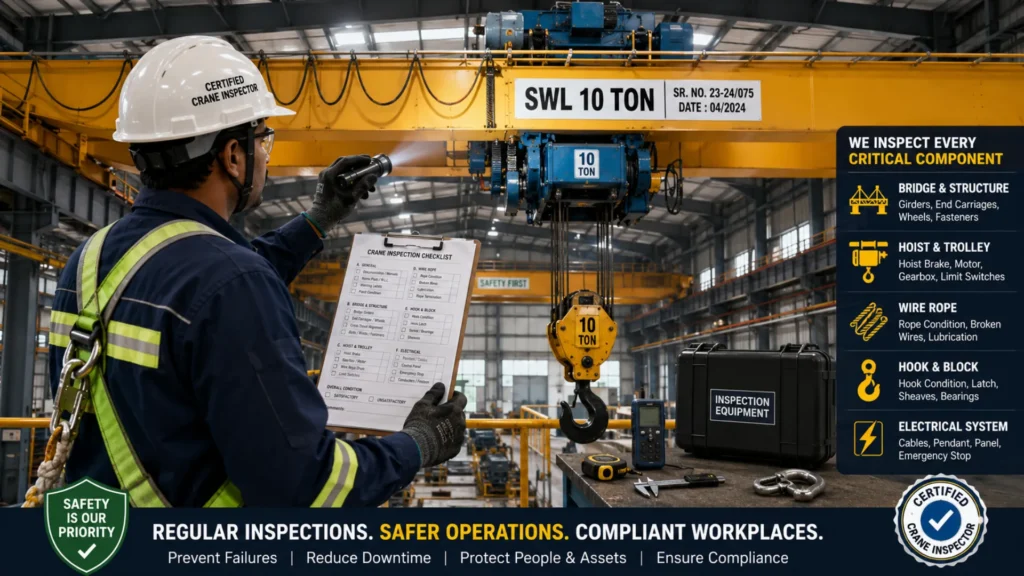
During the inspection, experts typically evaluate:
- Structural members and welds
- Hoist mechanism and wire ropes
- Hooks, sheaves, and lifting attachments
- Brakes and gearboxes
- Electrical systems and control panels
- Safety devices, limit switches, and emergency controls
Any defects identified during the examination should be corrected before the crane is returned to service.
Load Testing Requirements
Load testing is generally required when a new crane is installed, after major repairs, after significant structural modifications, or before the crane is put back into operation following extensive maintenance.
Proof load testing confirms that the crane can safely handle its rated lifting capacity under controlled conditions. This process helps verify the integrity of the structure, hoisting system, and safety mechanisms while providing documented evidence that the equipment is fit for use.
Inspection After Major Repairs or Alterations
Whenever major repairs or alterations are carried out, the crane should be inspected again before being used.
Examples include:
- Replacement of major structural members
- Installation of a new hoist or trolley
- Modification of load-bearing components
- Changes to electrical control systems
- Replacement of critical lifting components
These inspections ensure that repairs have not affected the crane’s structural strength or operational safety.
State-Specific Factory Rules
Although the Factory Act provides the overall legal framework, individual states may have additional rules regarding inspection frequency, certification, documentation, and testing procedures. Because these requirements can differ, organizations should always consult the applicable state factory regulations to ensure full compliance.
Recommended Industry Practice Beyond Legal Compliance
Many industries choose to inspect their EOT cranes more frequently than the minimum legal requirement. Daily pre-operation checks, monthly inspections, quarterly preventive maintenance, and annual detailed examinations together provide a much higher level of safety.
Taking this proactive approach helps reduce unexpected breakdowns, extends the service life of the crane, minimizes costly downtime, and creates a safer working environment for everyone involved.
Types of EOT Crane Inspections and Their Frequency
Regular inspections are essential to keep an EOT crane operating safely, efficiently, and in compliance with industry regulations. Different inspections are carried out at specific intervals, with each serving a unique purpose in identifying problems before they become serious safety hazards.
Daily Pre-Operational Inspection
A daily pre-operational inspection should be completed before the crane is put into service. This is mainly a visual check that helps operators identify obvious defects that could affect safe operation.
During the inspection, check the following:
- Wire ropes for wear, broken strands, or damage
- Hook condition, including cracks or excessive wear
- Brakes and emergency stop functions
- Limit switches and warning devices
- Pendant controls or remote control operation
- Any unusual oil leaks, loose components, or abnormal noises
If any issue is found, the crane should not be operated until it has been inspected and repaired.
Weekly and Monthly Inspections
Weekly and monthly inspections go beyond basic visual checks and focus on the crane’s operational and mechanical condition. These inspections help support preventive maintenance and reduce the chances of unexpected equipment failures.
Typical inspection activities include:
- Testing hoist, trolley, and bridge travel movements
- Inspecting lubrication of moving parts
- Checking gearboxes, bearings, and motors
- Tightening loose bolts and fasteners
- Examining electrical panels and cable connections
Quarterly Inspections
Quarterly inspections provide a more detailed assessment of the crane’s overall condition. Components are carefully examined to identify developing issues such as corrosion, structural wear, misalignment, excessive vibration, or mechanical deterioration. Detecting these problems early allows repairs to be scheduled before they lead to costly breakdowns or safety risks.
Annual Statutory Inspection
An annual statutory inspection is a comprehensive evaluation conducted to verify that the EOT crane meets all applicable safety standards and legal compliance requirements. Every major structural, mechanical, electrical, and safety component is thoroughly examined, tested, and documented to confirm the crane is fit for continued operation.
Third-Party Inspections
Third-party inspections are carried out by independent inspection agencies to provide an unbiased assessment of the crane’s condition. These inspections add credibility to maintenance records, support regulatory audits, assist with insurance requirements, and help organizations obtain certifications while demonstrating their commitment to workplace safety.
Comprehensive EOT Crane Inspection Checklist
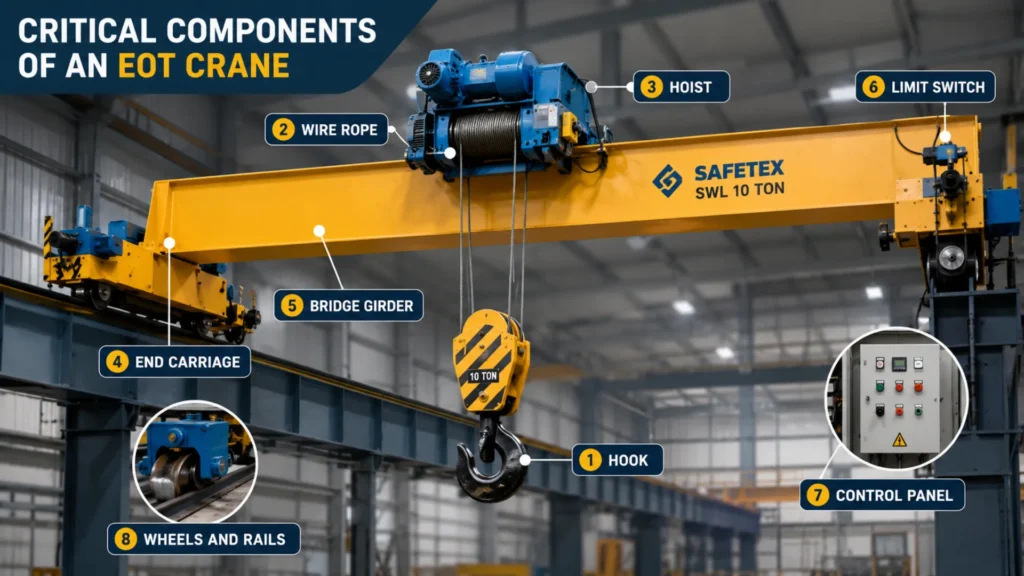
A detailed EOT crane inspection should cover every major component of the crane to ensure it operates safely, efficiently, and in compliance with industry standards. Following a structured checklist helps identify potential problems before they lead to equipment failure or workplace accidents.
Structural Components
Begin by inspecting the crane’s structural framework, including the bridge girders, end carriages, and runway structures. Look for cracks, corrosion, loose bolts, deformation, or any signs of excessive wear. These components carry the crane’s load, so even minor structural damage should be addressed immediately.
Lifting Components
Carefully examine all lifting parts, including hooks, wire ropes, chains, and other lifting attachments. Check hooks for cracks, bending, or excessive throat opening. Inspect wire ropes for broken strands, corrosion, kinks, or flattening, while chains and lifting accessories should be checked for wear, stretching, or damaged links.
Mechanical Systems
The crane’s mechanical systems must operate smoothly for safe lifting. Inspect the brakes to ensure they hold loads securely without slipping. Check gearboxes for oil leaks, unusual noise, or overheating. Also inspect wheels and bearings for wear, proper alignment, and smooth movement along the runway.
Electrical Components
Review the condition of the control panels, ensuring all switches and controls function correctly. Inspect the wiring systems for loose connections, damaged insulation, or exposed cables. Test the emergency stop functions to verify they immediately shut down crane operations when activated.
Safety Devices
Safety systems are essential for preventing accidents. Test limit switches to confirm they stop movements at safe operating limits. Verify that overload protection systems activate correctly when lifting capacity is exceeded. Ensure warning alarms, lights, and other safety indicators are functioning properly.
Documentation Review
Finally, review the crane’s maintenance records and previous inspection reports. These documents help identify recurring issues, confirm completed repairs, and ensure the EOT crane inspection follows regulatory requirements and recommended maintenance schedules.
Who Is Authorized to Inspect an EOT Crane?
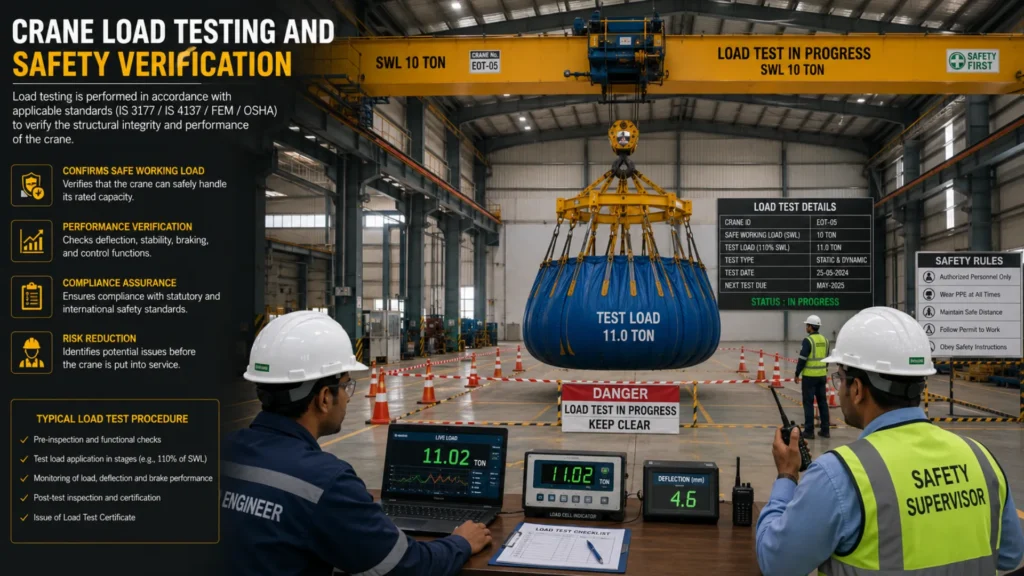
Not everyone is qualified to inspect an EOT crane. To ensure safety, legal compliance, and reliable performance, inspections should only be carried out by trained and authorized professionals with the right technical knowledge and experience.
Competent Person Requirements
A competent person is someone who has the necessary qualifications, practical experience, and understanding of EOT crane systems. They should be familiar with crane components, safety standards, inspection procedures, and common failure points. Their expertise allows them to identify defects that could affect the crane’s safe operation.
Third-Party Inspection Agencies
Many industries prefer to hire independent third-party inspection agencies for periodic crane inspections. These organizations provide unbiased assessments and issue inspection reports and certificates after evaluating the crane. External certification increases credibility, supports regulatory compliance, and helps build confidence during customer audits and safety inspections.
Manufacturer and Engineering Experts
For specialized inspections, major repairs, or performance evaluations, crane manufacturers and engineering experts are often the best choice. They have in-depth knowledge of the crane’s design and can recommend suitable repairs, upgrades, or preventive maintenance based on the equipment’s condition.
Importance of Certification and Reporting
Every inspection should be properly documented with a detailed report and certification. These records serve as proof of compliance, support workplace safety requirements, simplify future maintenance planning, and demonstrate that the EOT crane is safe for continued operation.
Consequences of Failing to Conduct Required EOT Crane Inspections
Skipping mandatory EOT crane inspections may seem like a way to save time or money, but it can lead to serious problems that affect worker safety, business operations, and legal compliance.
Workplace Accidents and Injuries
One of the biggest risks of ignoring inspections is the increased chance of workplace accidents. Undetected issues such as worn wire ropes, damaged hooks, faulty brakes, or electrical failures can cause sudden equipment failure during lifting operations. This puts crane operators, maintenance staff, and nearby workers at risk of severe injuries or even fatalities.
Legal and Regulatory Penalties
Industries are required to follow safety standards and inspection regulations. Failing to conduct scheduled EOT crane inspections can result in compliance violations, regulatory notices, financial penalties, or even temporary suspension of operations. Non-compliance can also damage a company’s reputation during audits and client evaluations.
Production Downtime
A crane that breaks down unexpectedly can bring an entire production line to a halt. Emergency repairs often take longer and cost more than planned maintenance, leading to missed deadlines, delayed deliveries, and reduced productivity.
Increased Maintenance Costs
Small defects that go unnoticed during routine inspections often develop into major mechanical failures. Repairing or replacing critical crane components after a breakdown is significantly more expensive than fixing minor issues early.
Insurance and Liability Issues
If an accident occurs and inspection records are missing or outdated, insurance claims may become difficult to process. Companies may also face legal liability, higher insurance premiums, and costly investigations, making regular EOT crane inspections essential for both safety and financial protection.
Best Practices for Maintaining EOT Crane Compliance
Maintaining EOT crane compliance is not something that should only happen during annual inspections. It requires a proactive approach that combines regular inspections, proper documentation, employee training, and timely repairs. Following these best practices helps improve workplace safety, reduce unexpected breakdowns, and ensure compliance with applicable regulations.
Establish a Preventive Inspection Schedule
Instead of waiting for problems to appear, create a preventive inspection schedule that covers daily, monthly, quarterly, and annual checks. Planning inspections throughout the year allows small issues to be detected early before they develop into expensive repairs or safety hazards. A structured schedule also helps minimize equipment downtime and keeps operations running efficiently.
Maintain Detailed Inspection Records
Accurate documentation is an essential part of crane compliance. Every inspection, maintenance activity, repair, and replacement should be properly recorded. These records demonstrate that the crane has been maintained according to safety standards and are extremely valuable during regulatory audits, insurance reviews, or internal compliance assessments.
Train Crane Operators and Maintenance Teams
Well-trained operators and maintenance personnel are often the first to notice unusual sounds, vibrations, or operating issues. Regular training helps employees identify potential hazards early, follow safe operating procedures, and report defects before they become serious safety risks.
Address Defects Immediately
Any defect found during an inspection should be corrected without unnecessary delay. Following a clear corrective action process reduces the risk of equipment failure, prevents accidents, and ensures the crane remains safe for continued operation.
Partner With Qualified Inspection Professionals
Working with experienced inspection professionals provides an added level of confidence. Certified experts understand current industry standards, perform detailed evaluations, identify hidden defects, and offer practical recommendations to help maintain long-term EOT crane compliance.
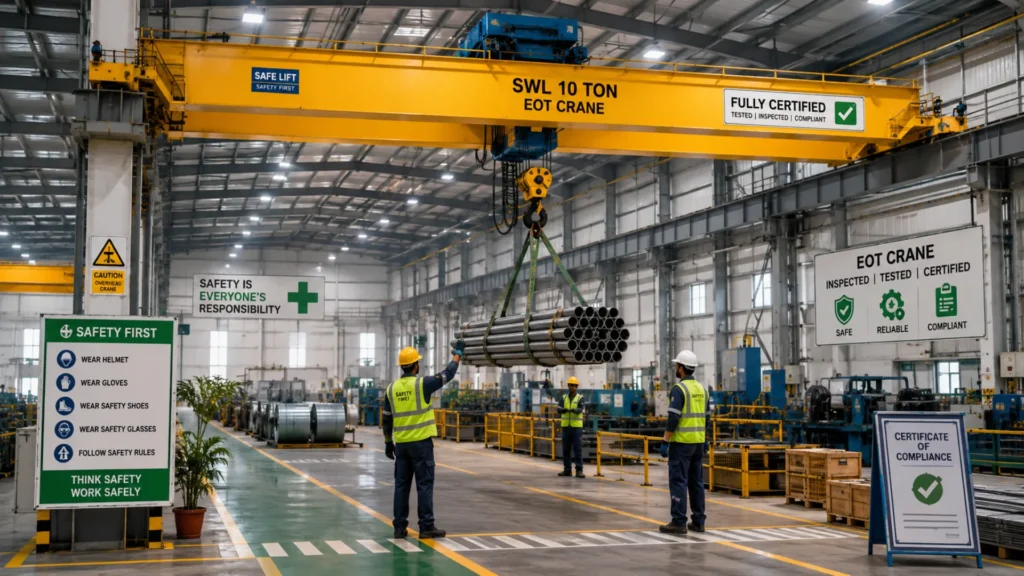
Frequently Asked Questions (FAQ)
Is annual inspection mandatory for EOT cranes?
Yes. In most industrial facilities, annual inspections are mandatory to comply with safety regulations and industry standards. Regular inspections help identify hidden defects, reduce accident risks, and ensure the crane remains safe for operation.
Can internal maintenance teams perform inspections?
Internal maintenance teams can carry out routine visual inspections and basic maintenance. However, periodic statutory inspections and certifications should be performed by qualified inspectors or authorized third-party agencies to ensure compliance.
When is load testing required?
Load testing is generally required after the installation of a new crane, following major repairs or modifications, after relocation, and during periodic certification when required by applicable standards or regulations.
What records should factories maintain?
Factories should keep inspection reports, preventive maintenance records, load test certificates, repair history, operator training records, and daily inspection checklists. Proper documentation helps during audits and demonstrates compliance.
What happens if a crane fails inspection?
If a crane fails inspection, it should be taken out of service immediately. The identified defects must be repaired, followed by re-inspection and approval before the crane is returned to operation.
How often should wire ropes and hooks be checked?
Wire ropes and hooks should be visually inspected before daily operations and thoroughly examined during scheduled maintenance. Regular checks help detect wear, corrosion, cracks, or deformation before they become serious safety hazards.
Conclusion
Regular EOT crane inspections are more than just a legal requirement—they are an important part of maintaining a safe and efficient workplace. Following the requirements of the Factory Act helps industries stay compliant while reducing the risk of equipment failure, workplace accidents, and costly downtime.
To keep cranes operating safely, inspections should be carried out at the recommended intervals, including daily visual checks, periodic inspections, and thorough annual examinations based on crane usage and working conditions. A proactive maintenance and inspection program not only extends the life of the equipment but also improves operational reliability and protects employees.
The best approach is to schedule inspections before problems arise and work with qualified inspection professionals who understand regulatory requirements and industry standards. Investing in regular crane inspections today helps ensure compliance, enhances workplace safety, and keeps your operations running smoothly for years to come.