 trivedi associate May 18, 2026
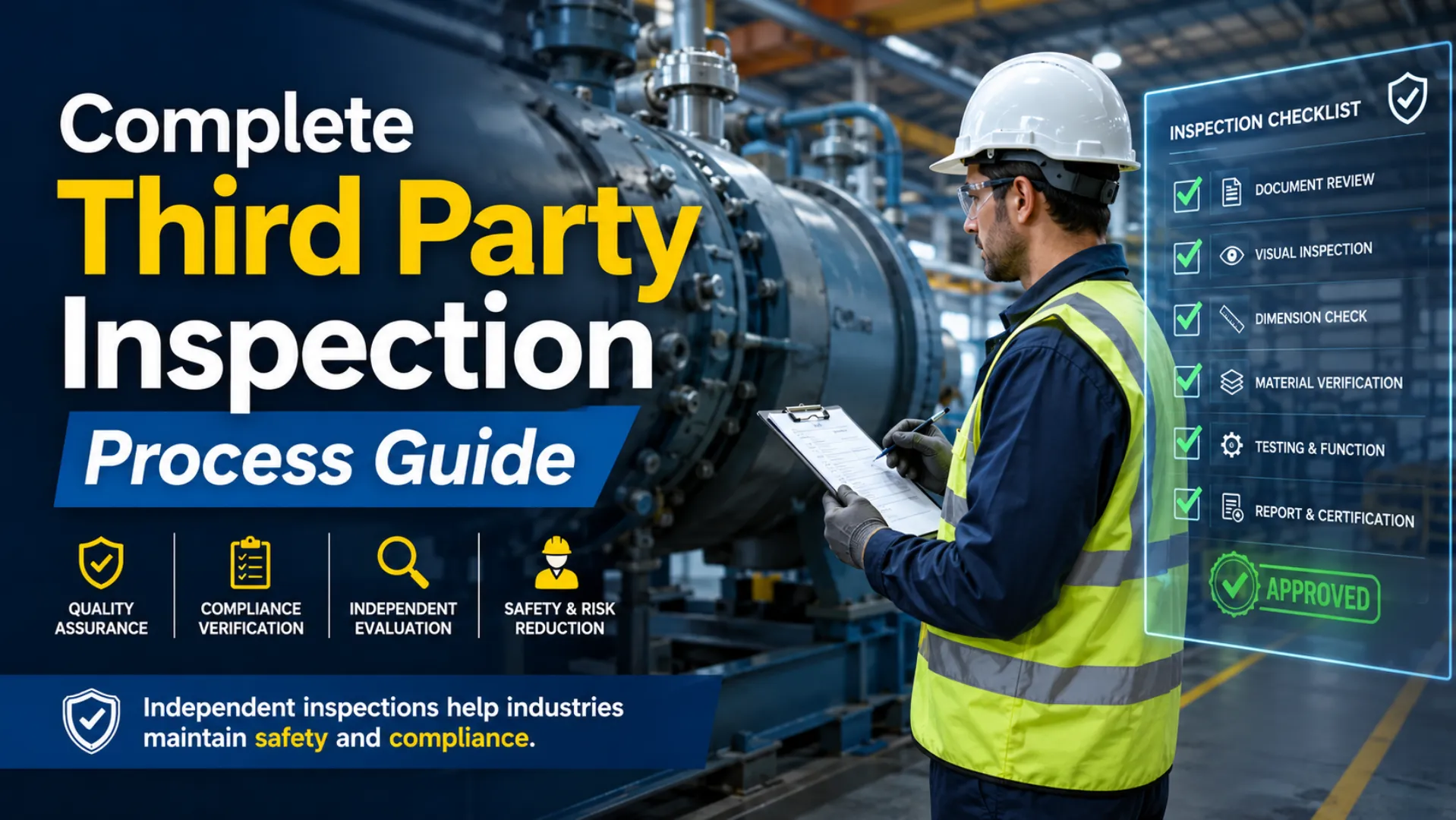
The Third Party Inspection Process plays an important role in maintaining product quality, safety, and industry compliance across different sectors. Industries such as manufacturing, oil & gas, construction, engineering, power plants, and fabrication rely on third party inspections to ensure products and equipment meet required standards before delivery or installation.
Unlike internal inspections, third party inspections are conducted by independent agencies that provide unbiased quality verification. This helps businesses reduce defects, improve customer trust, and avoid costly project delays. From raw material checking to final product approval, every stage of the inspection process focuses on quality assurance and compliance verification.
In this article, you will learn what third party inspection is, how the inspection process works, key inspection stages, and why industries depend on independent inspection agencies for reliable quality control.
What is Third Party Inspection?
Third party inspection is a quality control and verification process performed by an independent inspection agency. The purpose of this inspection is to ensure that products, materials, equipment, and manufacturing processes meet specified industry standards, client requirements, and safety regulations.
In this process, the inspection agency acts as a neutral party between the manufacturer and the buyer. Since the inspection is conducted independently, the results are objective and reliable. Industries use third party inspection services to reduce risks, maintain product quality, and ensure compliance with international standards.
Third party inspectors check different stages of production, including raw materials, fabrication, welding, testing, packaging, and final dispatch. Their reports help clients confirm that the product meets all technical and safety requirements before delivery.
Benefits of Third Party Inspection
- Independent quality verification
- Safety assurance for industrial equipment and products
- Compliance with national and international standards
- Reduced manufacturing and operational risks
Inspection Type Comparison
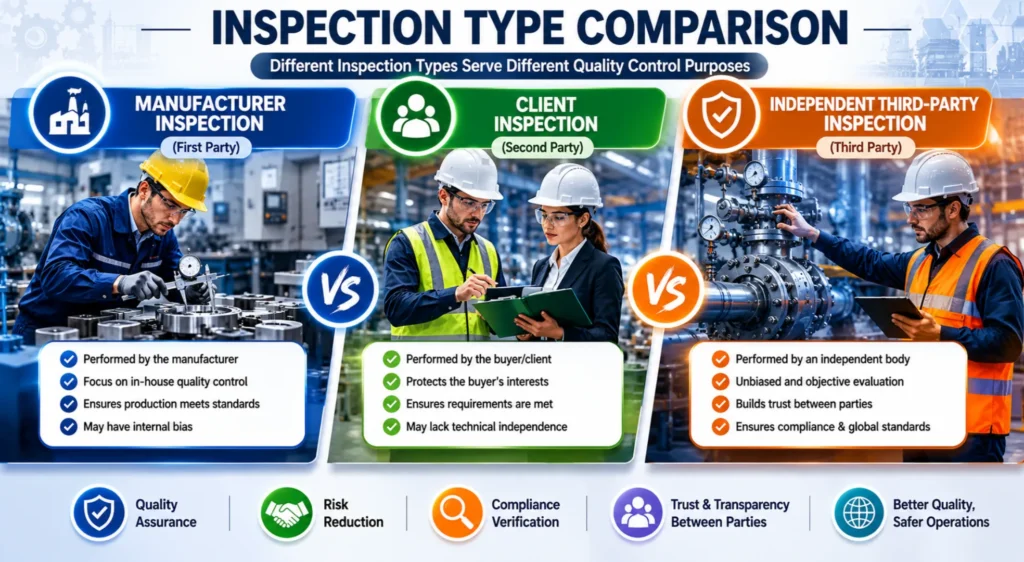
| Inspection Type | Performed By | Purpose |
| First Party | Manufacturer | Internal quality check |
| Second Party | Client/Buyer | Supplier evaluation |
| Third Party | Independent agency | Neutral inspection & certification |
Why Third Party Inspection is Important
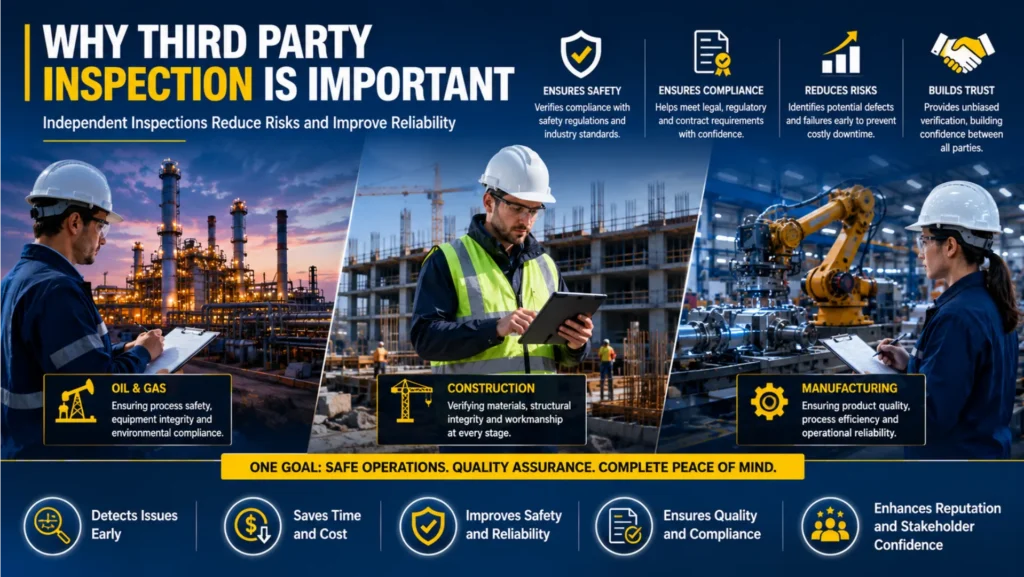
Third Party Inspection plays a major role in maintaining quality, safety, and reliability in industrial projects. It helps companies verify that products, materials, and equipment meet required standards before delivery or installation. In industries where even a small defect can cause major losses, independent inspection helps reduce risks and avoid costly mistakes.
It also supports international compliance by ensuring that products follow industry codes, client specifications, and export regulations. This builds confidence among customers and business partners while improving overall project performance.
Key Benefits of Third Party Inspection
- Prevents costly failures
- Improves customer trust
- Ensures safety standards
- Helps meet export requirements
- Reduces rejection rates
Pros & Cons of Third Party Inspection
Pros:
- Independent verification
- Better product reliability
- Compliance support
Cons:
- Additional inspection cost
- Possible project delays if issues arise
Industries That Use Third Party Inspection
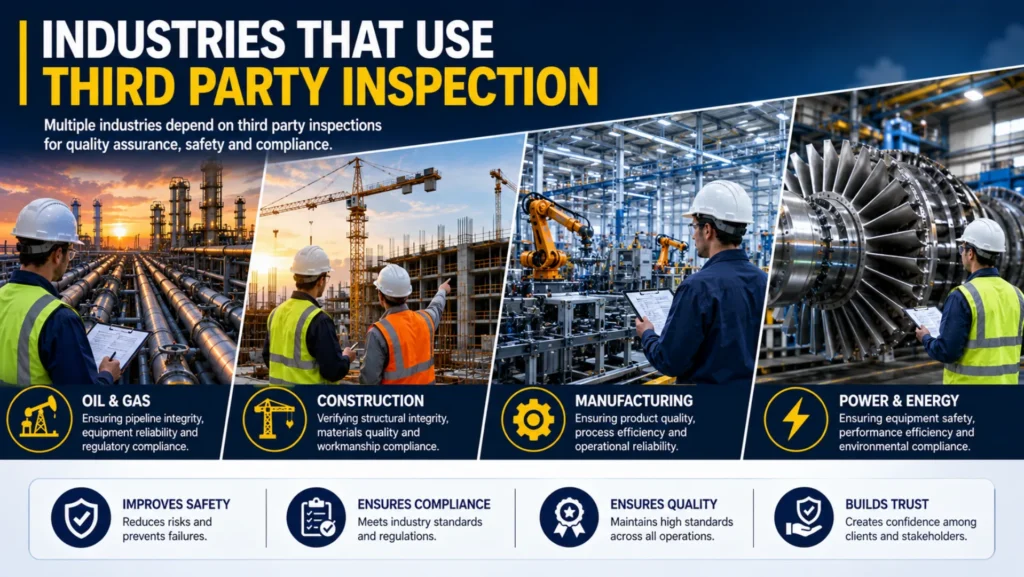
Third Party Inspection is widely used across industries where safety, quality, and compliance are critical. It helps businesses maintain high standards and reduce operational risks. From raw material verification to final equipment testing, inspections are carried out at different project stages to ensure reliability and performance.
Major industries that use Third Party Inspection include Oil & Gas, Construction, Manufacturing, Power Plants, Steel & Fabrication, Chemical Plants, and Marine & Aerospace sectors.
| Industry | Inspection Purpose |
| Oil & Gas | Pipeline and equipment safety |
| Construction | Structural quality assurance |
| Manufacturing | Product quality verification |
| Power Plants | Equipment reliability testing |
Step-by-Step Third Party Inspection Process
A proper Third Party Inspection Process helps industries maintain product quality, safety, and compliance with international standards. From reviewing documents to final approval, every inspection stage ensures that materials, manufacturing processes, and finished products meet the required specifications. Below is the complete step-by-step process followed by most third-party inspection agencies.
1. Inspection Request & Scope Review
The process begins when the client submits an inspection request along with project details and technical requirements. Inspectors carefully review the project specifications, quality standards, and inspection scope to understand what needs to be verified during the inspection process. This step helps avoid confusion and ensures smooth inspection execution.
2. Document Verification
Before physical inspection starts, all important documents are reviewed to confirm compliance with project and industry standards. This verification process helps identify issues early and ensures proper quality control procedures are followed throughout production.
Key documents reviewed include:
- Material Test Certificates
- Welding Procedures
- Inspection Test Plans (ITP)
Inspectors also verify engineering drawings, QA/QC records, and manufacturing standards to ensure all documentation is accurate and approved before production begins.
3. Inspection Planning & Scheduling
After document approval, the inspection team prepares a detailed inspection schedule. This includes defining inspection stages, assigning inspectors, planning timelines, and arranging required testing equipment. Proper planning ensures inspections are completed efficiently without affecting production deadlines.
4. Material & Equipment Inspection
At this stage, inspectors examine raw materials and equipment before manufacturing starts. The inspection includes visual checks, dimensional verification, and confirmation of material specifications. This step ensures that only approved and quality-tested materials are used in the manufacturing process.
5. In-Process Inspection
During manufacturing, continuous monitoring is carried out to maintain production quality. Inspectors check welding quality, fabrication accuracy, and process compliance according to approved standards and procedures. Regular inspections during production help identify defects early and reduce costly rework.
6. NDT & Quality Testing
Non-Destructive Testing (NDT) methods are used to detect hidden defects without damaging the product. Common testing methods include Ultrasonic Testing (UT), Radiographic Testing (RT), and Magnetic Particle Testing (MPT). These tests help ensure product reliability, safety, and structural integrity.
Benefits of NDT testing:
- Detect internal defects
- Improve safety
- Ensure reliability
7. Final Inspection & Reporting
The final stage of the Third Party Inspection Process involves complete verification of the finished product before dispatch. Inspectors check product dimensions, visual quality, packing conditions, labeling, and overall compliance with project specifications. After successful inspection, a detailed inspection report is generated and submitted for client approval and final acceptance.
| Inspection Stage | Main Objective |
| Material Inspection | Verify raw material quality |
| In-Process Inspection | Monitor production quality |
| Final Inspection | Ensure compliance before dispatch |
Standards Used in Third Party Inspection
Third party inspection follows internationally accepted standards to ensure product quality, safety, and reliable performance across different industries. These standards help inspectors check whether materials, equipment, and manufacturing processes meet required specifications and compliance guidelines. Industries such as oil & gas, construction, manufacturing, and engineering rely heavily on these standards for quality assurance.
Common standards used in third party inspection include:
- ISO Standards – Focus on quality management and process control
- ASME – Standards for boilers, pressure vessels, and mechanical systems
- API – Inspection standards for the oil and gas industry
- ASTM – Material testing and product quality standards
- AWS – Welding standards and inspection procedures
These standards also cover:
- Product quality standards
- Welding standards
- Safety regulations
- Testing procedures
Common Challenges in Third Party Inspection
Third party inspection plays an important role in maintaining product quality and safety, but several challenges can affect the inspection process and project timelines.
Common Challenges
- Documentation errors and missing records
- Communication gaps between clients, vendors, and inspectors
- Delayed inspections causing project hold-ups
- Non-compliance with industry standards and regulations
- Unqualified inspection teams leading to inaccurate results
Quick Solutions
To avoid these issues, companies should focus on proper planning before inspections begin. Hiring experienced inspectors helps ensure accurate evaluations and smooth coordination. In addition, using clear reporting systems improves communication, reduces confusion, and keeps all inspection records properly organized for future reference.
How to Choose the Right Third Party Inspection Company
Choosing the right third party inspection company is important for maintaining product quality, safety, and compliance standards. Start by checking the company’s certifications, industry reputation, and experience in handling similar projects. A reliable inspection partner should have qualified inspectors, strong reporting systems, and knowledge of international compliance requirements. Clear communication and fast reporting also help businesses avoid delays and quality issues.
Checklist for Selecting a Third Party Inspection Company:
- ISO-certified inspection company
- Experienced QA/QC inspection team
- Fast and accurate reporting system
- Industry-specific inspection expertise
- Knowledge of global quality and safety standards
- Transparent inspection process and documentation
Conclusion
The third party inspection process plays an important role in maintaining quality, safety, and compliance across different industries. It helps businesses identify defects early, reduce operational risks, and ensure that products, materials, and equipment meet required standards. From manufacturing and construction to oil & gas and engineering projects, third party inspections improve reliability and build customer confidence.
By working with professional inspection experts, companies can achieve better project compliance, avoid costly errors, and maintain high safety standards throughout operations. If you want to improve industrial quality assurance and ensure smooth project execution, contact a trusted third party inspection service provider for professional inspection support.