 trivedi associate May 28, 2026
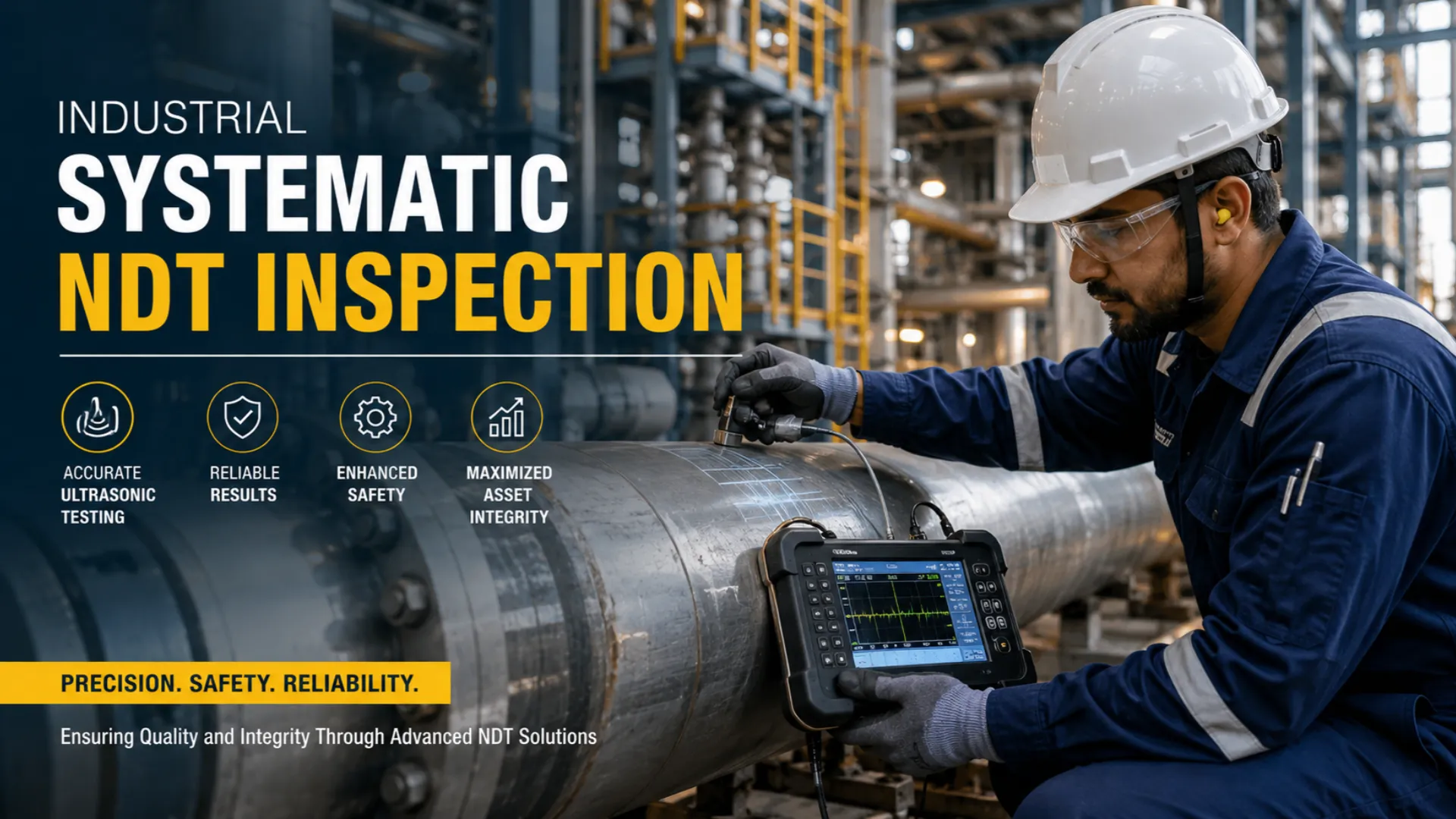
Systematic NDT testing, also known as Non-Destructive Testing (NDT), is a process used to inspect materials, components, and structures without causing any damage to them. Industries use this testing method to detect cracks, defects, leaks, or internal flaws while keeping the product fully usable after inspection.
Systematic NDT testing plays an important role in industries like oil & gas, manufacturing, aerospace, construction, power plants, and automotive. It helps companies maintain high safety standards, improve product quality, and reduce the risk of equipment failure. By identifying problems early, businesses can avoid costly repairs, downtime, and accidents.
There are several commonly used NDT methods, including Ultrasonic Testing (UT), Radiographic Testing (RT), Magnetic Particle Testing (MPT), Liquid Penetrant Testing (LPT), and Visual Inspection. Each method is designed for specific materials and inspection requirements.
Today, systematic NDT testing is widely used for quality assurance, preventive maintenance, and regulatory compliance. It ensures that critical equipment and structures remain safe, reliable, and efficient throughout their operational life.
Introduction to Systematic NDT Testing
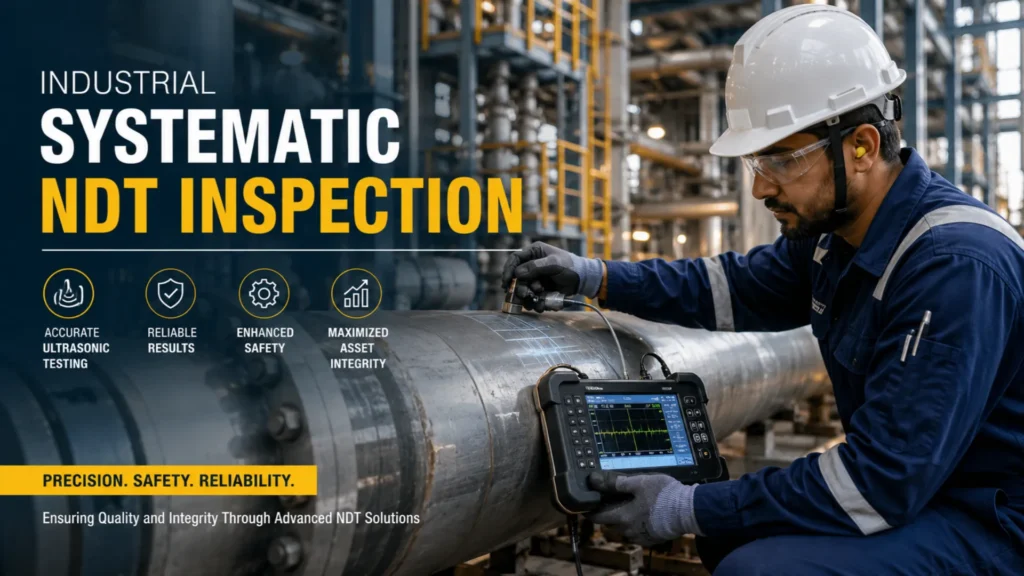
Systematic NDT testing, also known as Non-Destructive Testing, is a method used to inspect materials, components, and structures without damaging them. In simple words, it helps industries check whether a product or machine is safe and working properly while keeping it fully usable. This testing method is widely used in industries where safety, quality, and performance are extremely important.
Unlike destructive testing, where a sample is broken or damaged to examine its strength, non-destructive testing allows engineers to inspect the same material without causing any harm. For example, in destructive testing, a metal rod may be bent until it breaks to measure its strength. In NDT testing, special tools like ultrasonic waves, X-rays, or magnetic testing are used to find cracks or defects without damaging the rod.
NDT plays a major role in modern industrial safety. Industries such as oil and gas, construction, aerospace, automotive, manufacturing, and power plants rely heavily on systematic NDT testing to prevent accidents and equipment failures. For example, aircraft parts are carefully inspected before flights, pipelines are tested for leaks, and bridges are checked for structural damage.
For beginners, NDT can be understood as a “health check-up” for machines and materials. It helps companies identify problems early, improve product quality, reduce repair costs, and most importantly, protect human lives and the environment.
How Does Systematic NDT Testing Work?
Systematic NDT testing follows a structured inspection process that helps industries detect defects without damaging the material or component being tested. The process usually starts with preparing the surface and selecting the right testing method based on the material, size, and type of defect that needs to be identified.
Next, trained technicians use specialized equipment such as ultrasonic testing machines, radiography systems, magnetic particle testing tools, or dye penetrant kits to inspect the material. These tools help identify cracks, corrosion, leaks, voids, or internal weaknesses that may not be visible to the naked eye.
A wide range of materials can be tested through systematic NDT testing, including metals, concrete, composites, plastics, and welded structures. Industries like oil and gas, aerospace, automotive, construction, and manufacturing rely on these inspections to maintain safety and product quality.
The workflow is usually carried out step by step:
- Surface preparation
- Selection of testing method
- Equipment calibration
- Inspection and defect detection
- Data recording and analysis
- Final reporting and recommendations
For example, in the aerospace industry, ultrasonic testing is commonly used to detect hidden cracks in aircraft components. In construction projects, radiographic testing helps inspect weld quality in pipelines and steel structures.
After testing is completed, inspectors prepare detailed reports that include findings, defect locations, severity levels, and repair recommendations. This reporting and analysis process helps companies make informed maintenance and safety decisions.
Types of Systematic NDT Testing Methods
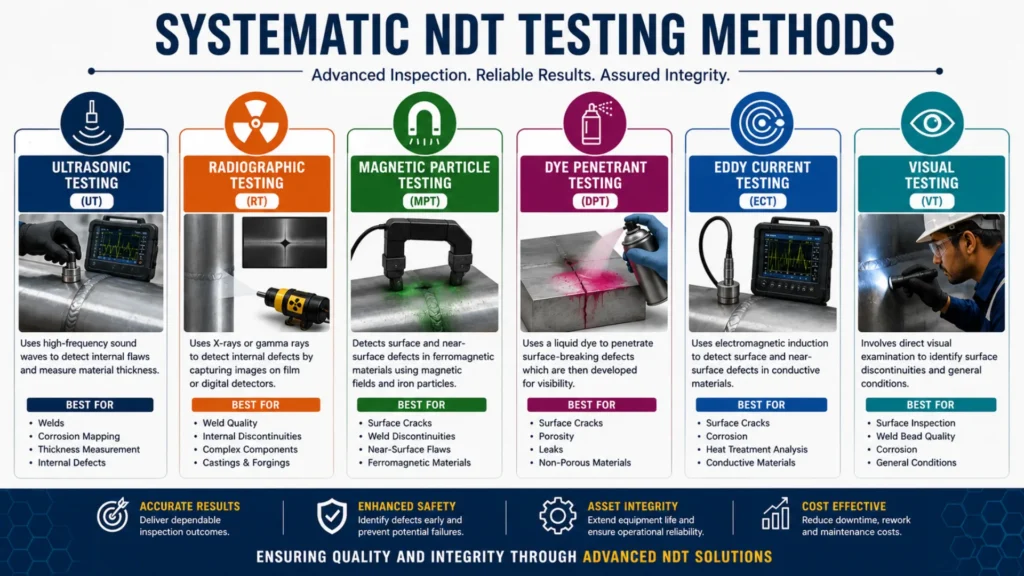
Systematic NDT testing methods are used across many industries to inspect materials, components, and structures without causing damage. Each method works differently and is chosen based on the type of material, defect location, and inspection requirements. From finding internal cracks to checking surface flaws, these testing techniques help maintain product quality, workplace safety, and equipment reliability.
Ultrasonic Testing (UT)
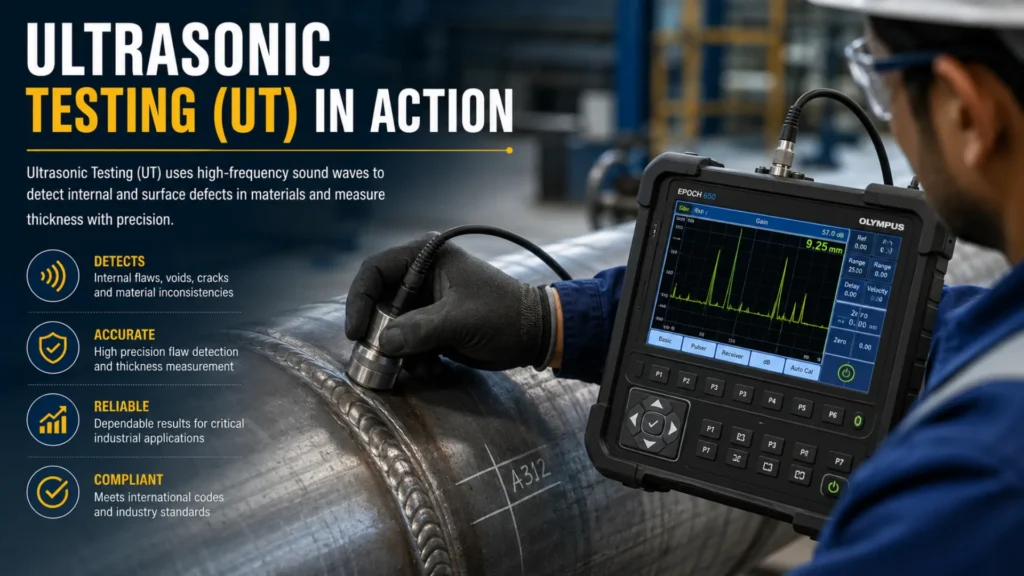
Ultrasonic Testing (UT) is one of the most widely used systematic NDT testing methods for detecting internal defects in materials. This method works by sending high-frequency sound waves into a material through a testing probe. When the sound waves hit a crack, void, or other discontinuity, they reflect back to the device, helping inspectors identify the defect’s location and size.
UT is commonly used in industries such as aerospace, construction, oil and gas, power generation, and manufacturing. It is highly effective for inspecting welds, pipelines, pressure vessels, and metal components.
One of the biggest advantages of UT is its ability to detect hidden flaws with high accuracy. It also provides immediate results, requires access to only one side of the material in many cases, and does not damage the tested object. Because of its precision and reliability, UT remains an essential part of modern quality inspection processes.
Radiographic Testing (RT)
Radiographic Testing (RT) is a non-destructive testing method that uses X-rays or gamma rays to inspect the internal structure of a material or component. During the process, radiation passes through the object and creates an image on film or a digital detector. Differences in material thickness or internal defects appear clearly on the image, allowing inspectors to identify problems such as cracks, voids, or inclusions.
RT is widely used in industries where internal inspection is critical, including aerospace, automotive, construction, shipbuilding, and oil and gas. It is especially common for weld inspections, casting evaluations, and pipeline testing.
One of the main benefits of RT is its ability to provide a permanent inspection record through radiographic images. It can inspect complex structures and detect hidden defects that may not be visible from the surface. This makes Radiographic Testing an important method for maintaining safety and quality standards in industrial applications.
Magnetic Particle Testing (MPT)
Magnetic Particle Testing (MPT) is used to detect surface and near-surface cracks in ferromagnetic materials such as iron, steel, and nickel alloys. In this method, the material is magnetized, and fine magnetic particles are applied to the surface. If there is a crack or defect, the magnetic field becomes distorted, causing the particles to gather around the damaged area and make it visible.
MPT is commonly used in manufacturing, automotive, railway, and heavy machinery industries. It is highly effective for inspecting welds, engine components, shafts, and structural parts.
This testing method is fast, reliable, and relatively simple to perform. It helps inspectors quickly identify defects that could weaken the material and lead to equipment failure if left unnoticed.
Dye Penetrant Testing (DPT)
Dye Penetrant Testing (DPT), also called Liquid Penetrant Testing, is a popular surface inspection method used to detect visible cracks and surface-breaking defects. The process begins by applying a liquid penetrant to the surface of the material. The liquid seeps into small cracks or openings through capillary action. After excess penetrant is removed, a developer is applied to draw the trapped liquid back to the surface, making the defects clearly visible.
DPT is commonly used for inspecting metals, plastics, ceramics, and other non-porous materials. It is widely used in aerospace, automotive, and manufacturing industries for checking welds, castings, and machine components.
This method is affordable, easy to perform, and highly effective for identifying small surface defects that may otherwise go unnoticed during normal inspection procedures.
Visual Testing (VT)
Visual Testing (VT) is the simplest and most basic form of non-destructive testing. It involves inspecting a material, component, or structure using the human eye, sometimes with the help of tools such as magnifying glasses, mirrors, borescopes, or cameras.
VT is often the first inspection step before applying advanced systematic NDT testing methods. Inspectors look for visible issues such as cracks, corrosion, misalignment, surface damage, or poor weld quality.
This method is widely used in construction, manufacturing, aviation, and maintenance industries because it is quick, cost-effective, and easy to perform. Although simple, Visual Testing plays an important role in identifying obvious defects and preventing larger problems from developing.
Eddy Current Testing (ECT)
Eddy Current Testing (ECT) is an electromagnetic inspection method used to evaluate the electrical conductivity and surface condition of conductive materials. In this process, an alternating current passes through a probe coil, creating a magnetic field. When the probe is placed near a conductive material, eddy currents are generated. Any cracks, corrosion, or material changes disturb these currents, helping inspectors identify defects.
ECT is commonly used in aerospace, automotive, and power generation industries. It is especially effective for aircraft inspections, heat exchanger tubes, and thin metal surfaces.
One major advantage of ECT is that it can detect very small surface and near-surface defects without direct contact. It also provides fast results and works well for inspecting complex shapes and hard-to-reach areas.
Benefits of Systematic NDT Testing
Systematic NDT (Non-Destructive Testing) plays a major role in keeping industrial equipment safe, reliable, and efficient. Instead of waiting for a breakdown to happen, companies use regular NDT inspections to identify hidden defects early and take corrective action before serious problems occur. This proactive approach helps industries avoid costly downtime and maintain smooth operations.
Here are some of the key benefits of systematic NDT testing:
- Prevents equipment failure
Regular NDT inspections help detect cracks, corrosion, leaks, and material weaknesses before they become major issues. Early detection reduces the chances of unexpected equipment breakdowns and production interruptions. - Improves worker safety
Faulty machinery and damaged structures can create dangerous working conditions. Systematic NDT testing helps identify safety risks in advance, reducing the possibility of accidents and protecting workers on-site. - Reduces maintenance costs
Emergency repairs are usually more expensive than planned maintenance. By identifying issues early, businesses can schedule repairs at the right time and avoid costly emergency shutdowns or component replacements. - Increases operational efficiency
Equipment that is regularly inspected and maintained performs more efficiently. NDT testing helps industries maintain consistent production quality and reduce unnecessary downtime. - Supports compliance requirements
Many industries must follow strict safety and quality regulations. Systematic NDT testing helps businesses meet industry standards, inspection requirements, and legal compliance guidelines more effectively. - Extends equipment lifespan
Continuous monitoring and timely maintenance help machinery and industrial assets last longer. This improves the return on investment and reduces the need for frequent replacements.
Overall, systematic NDT testing is an essential part of modern industrial maintenance. It helps businesses improve safety, reduce operational risks, and maintain long-term equipment reliability while keeping costs under control.
Industries That Use Systematic NDT Testing
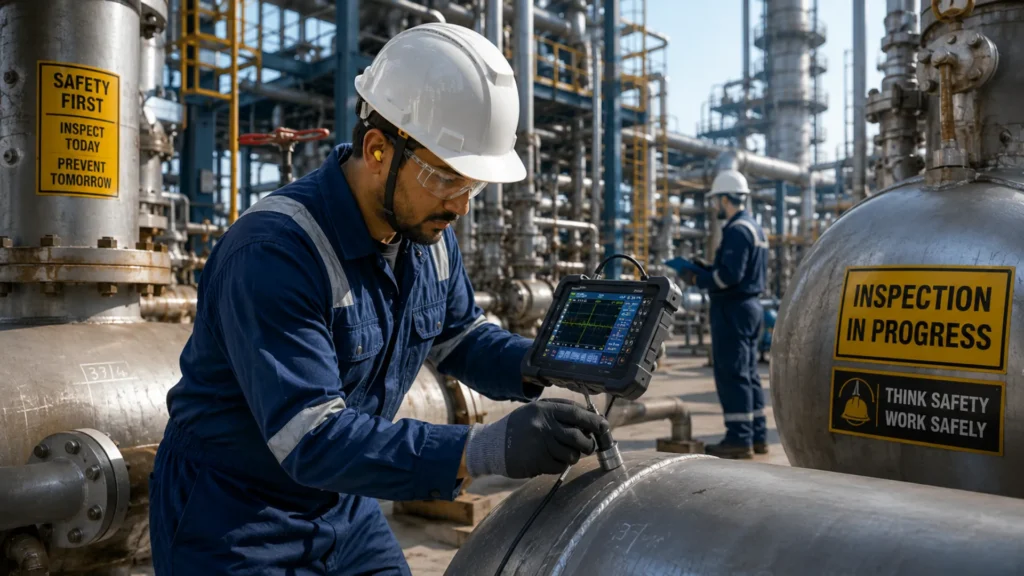
Systematic NDT testing is widely used across industries where safety, quality, and equipment reliability are critical. It helps companies detect hidden defects, reduce operational risks, and maintain compliance without damaging materials or structures.
Oil & Gas Industry
The oil and gas sector heavily depends on NDT testing for pipelines, storage tanks, pressure vessels, and drilling equipment. Regular inspections help identify corrosion, cracks, and leaks before they become serious problems. In Gujarat, industrial hubs like Jamnagar, Hazira, and Dahej use advanced NDT methods in large oil and gas operations.
Refineries
Refineries operate under extreme temperatures and pressure, making equipment inspection essential. Systematic NDT testing is commonly used during shutdown maintenance to inspect boilers, heat exchangers, and welded joints. Gujarat is home to some of India’s largest refinery operations, including facilities in Jamnagar, where routine NDT inspections play a major role in plant safety.
Chemical Plants
Chemical plants use NDT testing to ensure pipelines, reactors, and storage systems remain safe while handling hazardous chemicals. Even a small crack or material failure can lead to major safety issues, which is why regular inspection schedules are important.
Manufacturing Industry
Manufacturing companies use NDT methods to maintain product quality and reduce defects in machinery, metal components, and fabricated structures. Industries involved in heavy engineering and fabrication across Ahmedabad and Vadodara often rely on ultrasonic and radiographic testing for quality control.
Construction and Infrastructure
In construction projects, NDT testing is used to inspect concrete structures, steel frameworks, bridges, and welds. It helps engineers verify structural strength without damaging the building materials.
Power Plants
Thermal, solar, and nuclear power plants use systematic NDT testing to inspect turbines, boilers, pipelines, and pressure systems. Preventive inspection helps avoid costly shutdowns and improves operational efficiency.
Aerospace and Marine Industry
The aerospace and marine sectors require highly accurate inspections because safety standards are extremely strict. Aircraft components, ship structures, and marine equipment are regularly tested using advanced NDT techniques to detect even the smallest defects before failure occurs.
Why Systematic NDT Testing is Important for Industrial Safety
Systematic NDT testing plays a major role in maintaining industrial safety and preventing costly failures. In industries like oil and gas, construction, manufacturing, aerospace, and power plants, even a small crack or hidden defect can lead to serious accidents if it goes undetected. Regular inspection through non-destructive testing helps identify problems early before they become dangerous.
One of the biggest benefits of NDT testing is accident prevention. Faulty pipelines, pressure vessels, storage tanks, or structural components can fail unexpectedly and put workers’ lives at risk. By detecting internal flaws, corrosion, or material weakness in advance, industries can take corrective action before a breakdown occurs.
Leak prevention is another important reason why systematic testing matters. In chemical plants and oil refineries, leaks can cause fires, explosions, environmental damage, and financial losses. NDT methods help monitor equipment condition without damaging operations, making inspections safer and more efficient.
Systematic NDT testing also improves structural reliability. Bridges, industrial machinery, aircraft parts, and heavy equipment must remain strong and dependable under constant stress. Regular inspections help ensure these structures continue performing safely over time.
In addition, many industries must follow strict compliance standards and safety regulations. Consistent NDT inspections help companies meet legal requirements, reduce operational risks, and avoid penalties. Real-world industrial disasters caused by unnoticed defects clearly show why proactive testing and risk reduction are essential for long-term safety and reliability.
Common Defects Detected by Systematic NDT Testing
Systematic NDT testing helps industries identify hidden defects before they become serious safety or operational problems. By using non-destructive testing methods regularly, companies can improve equipment reliability, reduce downtime, and maintain safety standards without damaging the material being inspected.
| Defect Type | Description | Common Impact |
| Cracks | Small or large fractures that develop on the surface or inside materials due to stress, pressure, or temperature changes. | Can lead to sudden structural failure if ignored. |
| Corrosion | Gradual deterioration of metal caused by moisture, chemicals, or environmental exposure. | Weakens equipment and reduces lifespan. |
| Welding Defects | Includes incomplete fusion, slag inclusion, undercutting, and poor weld penetration. | Affects weld strength and overall structural integrity. |
| Material Fatigue | Damage caused by repeated loading and unloading cycles over time. | Increases the risk of unexpected breakdowns. |
| Porosity | Tiny air pockets or voids trapped inside welds or materials during manufacturing. | Reduces durability and mechanical strength. |
| Leakage | Escaping gas or liquid from pipelines, tanks, or pressure vessels. | Causes safety hazards, product loss, and environmental issues. |
| Structural Weaknesses | Hidden flaws or weak areas inside components or structures. | Impacts overall performance and load-bearing capacity. |
Regular NDT inspections make it easier to detect these issues early and take corrective action before major failures occur. This not only improves workplace safety but also helps businesses save repair and replacement costs in the long run.
Systematic NDT Testing Standards & Certifications
In the field of systematic NDT testing, following recognized standards and certifications is essential for maintaining accuracy, safety, and reliability. Industries such as oil and gas, construction, aerospace, manufacturing, and power plants rely heavily on these regulations to ensure proper inspection practices.
Organizations like ASNT set globally accepted certification programs for NDT professionals. ASNT-certified inspectors are trained to detect material defects, evaluate structural integrity, and follow proper testing procedures. Their certification helps companies maintain high inspection quality and reduce operational risks.
International standards from ISO provide guidelines for quality management and testing processes, while ASTM International develops technical standards for materials, products, and testing methods. In industries like petrochemical and pipeline inspection, American Petroleum Institute standards are widely followed to improve equipment safety and compliance.
In India, IS standards issued by the Bureau of Indian Standards help regulate testing procedures and inspection requirements across multiple sectors.
Certified inspectors play a major role in ensuring inspections meet industry regulations and safety requirements. Their expertise helps businesses avoid costly failures, maintain compliance, and improve overall operational reliability.
How to Choose the Right Systematic NDT Testing Company
Choosing the right systematic NDT testing company is important for ensuring accurate inspections, workplace safety, and long-term reliability. A trusted company can help identify issues early and reduce the risk of costly failures. Before making a decision, use the checklist below to compare your options carefully.
- Check Industry Experience
Look for a company with proven experience in handling NDT inspections for your industry. Different sectors such as construction, oil & gas, manufacturing, and aerospace require different testing approaches and expertise. - Verify Certified Technicians
Make sure the technicians are properly trained and certified. Qualified professionals follow industry standards and perform inspections with greater accuracy and reliability. - Evaluate Equipment Quality
Modern and well-maintained testing equipment improves inspection precision. Companies using advanced NDT technology often deliver faster and more dependable results. - Look for Industry Specialization
Some companies specialize in specific inspection methods or industries. Choosing a specialist can improve testing efficiency and reporting accuracy. - Review Reporting Standards
Clear, detailed, and easy-to-understand reports are essential. A professional systematic NDT testing company should provide transparent documentation with actionable insights. - Confirm Safety Compliance
Ensure the company follows safety regulations and industry compliance standards. Strong safety practices reflect professionalism and reduce operational risks.
Why Choose Trivedi Associates for Systematic NDT Testing?
When it comes to reliable and accurate non-destructive testing, Trivedi Associates has built a strong reputation across Gujarat’s industrial sector. With years of hands-on experience in systematic NDT testing, the company understands the practical challenges industries face and delivers inspection solutions that help maintain safety, quality, and operational efficiency.
One of the biggest advantages of working with Trivedi Associates is their deep understanding of Gujarat’s growing industrial environment. From manufacturing plants and fabrication units to power, oil & gas, and engineering industries, their team has experience handling inspections across a wide range of sectors. This industry-specific expertise allows them to provide accurate testing solutions based on real operational requirements.
The company is backed by a certified and skilled inspection team trained to follow industry standards and safety protocols. They use modern NDT inspection equipment to ensure precise testing results, helping businesses identify defects and maintain structural integrity without damaging materials or components.
Trivedi Associates also supports companies with compliance and quality assurance requirements. Their detailed reporting and professional inspection process help businesses meet industrial safety standards and project specifications with confidence.
Whether it is routine inspections, quality control, or preventive maintenance, Trivedi Associates focuses on delivering dependable NDT services that industries can trust. Their commitment to accuracy, timely service, and client satisfaction makes them a preferred choice for systematic NDT testing in Gujarat.
Frequently Asked Questions (FAQs)
Systematic NDT testing helps inspect materials and structures without causing damage. It detects defects early to improve safety, quality, and equipment reliability.
The main types of Systematic NDT include Ultrasonic Testing (UT), Radiographic Testing (RT), Magnetic Particle Testing (MPT), Liquid Penetrant Testing (LPT), Eddy Current Testing (ECT), and Visual Testing (VT). Each method is used for different inspection needs.
Yes, many industries require Systematic NDT testing to meet safety and quality standards. Requirements depend on industry regulations and project specifications.
Systematic NDT testing is widely used in oil & gas, aerospace, construction, automotive, manufacturing, and power plants. It helps maintain safety and operational efficiency.
Systematic NDT testing inspects materials without damaging them, while destructive testing damages the sample during evaluation. Systematic NDT is more suitable for regular maintenance inspections.
The frequency depends on equipment type, safety standards, and operating conditions. Critical systems may require inspections every few months or annually.
Yes, Systematic NDT testing is safe when performed by trained professionals using proper safety procedures and equipment.
Conclusion
NDT testing plays a vital role in maintaining quality, reliability, and safety across different industries. From manufacturing plants to construction sites and oil & gas facilities, non-destructive testing helps detect hidden defects before they turn into serious problems. This not only protects equipment and infrastructure but also helps keep workers and operations safe.
One of the biggest advantages of NDT testing is its long-term value. Regular inspections can reduce unexpected breakdowns, lower repair costs, improve equipment lifespan, and help businesses meet safety and compliance standards. It also minimizes downtime, which is essential for maintaining productivity and operational efficiency.
Choosing professional NDT experts ensures accurate inspections, reliable reporting, and compliance with industry standards. If your business wants to improve safety, reduce risks, and maintain high-quality operations, working with experienced NDT testing professionals is a smart long-term investment.