 trivedi associate June 25, 2026
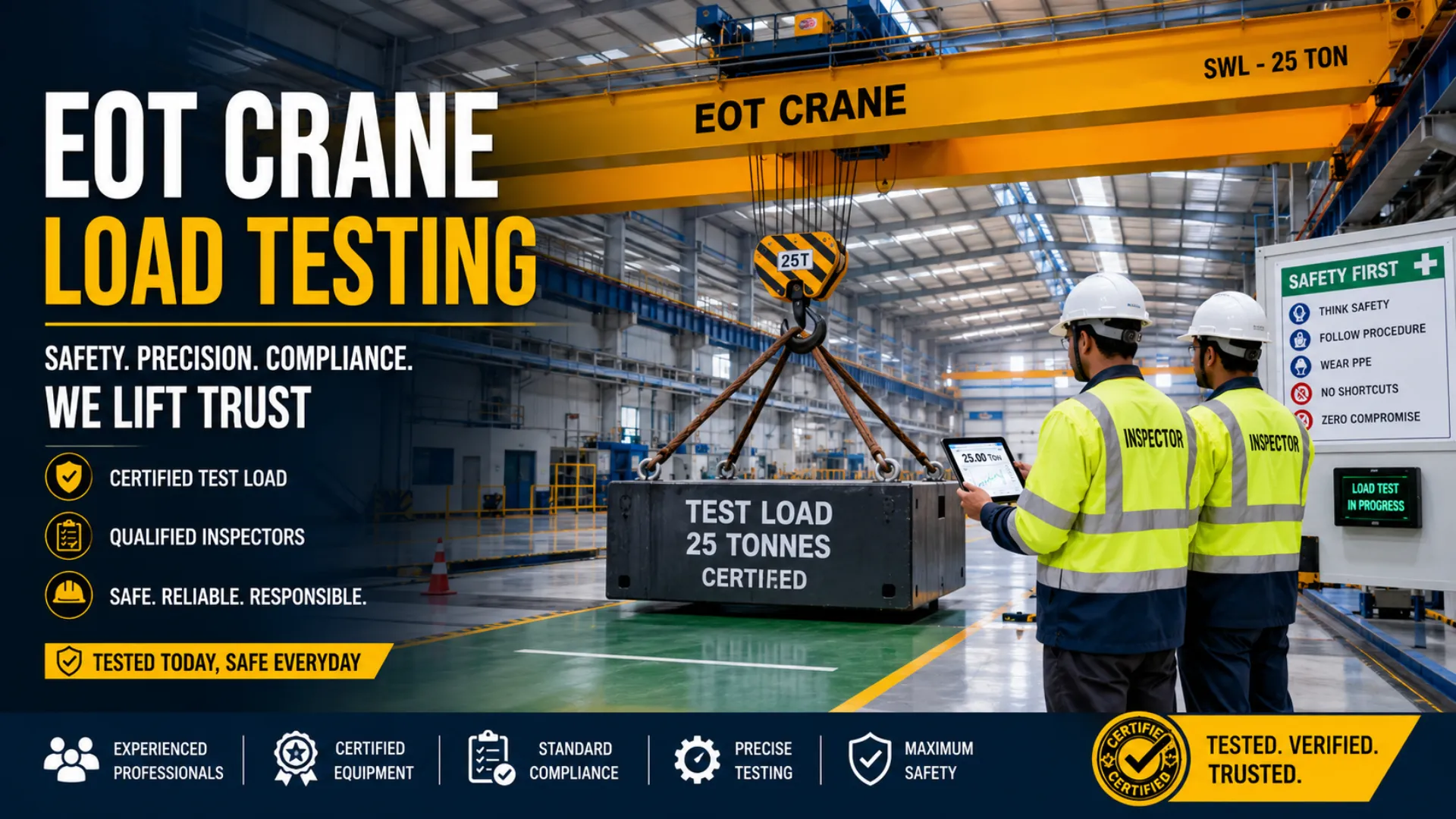
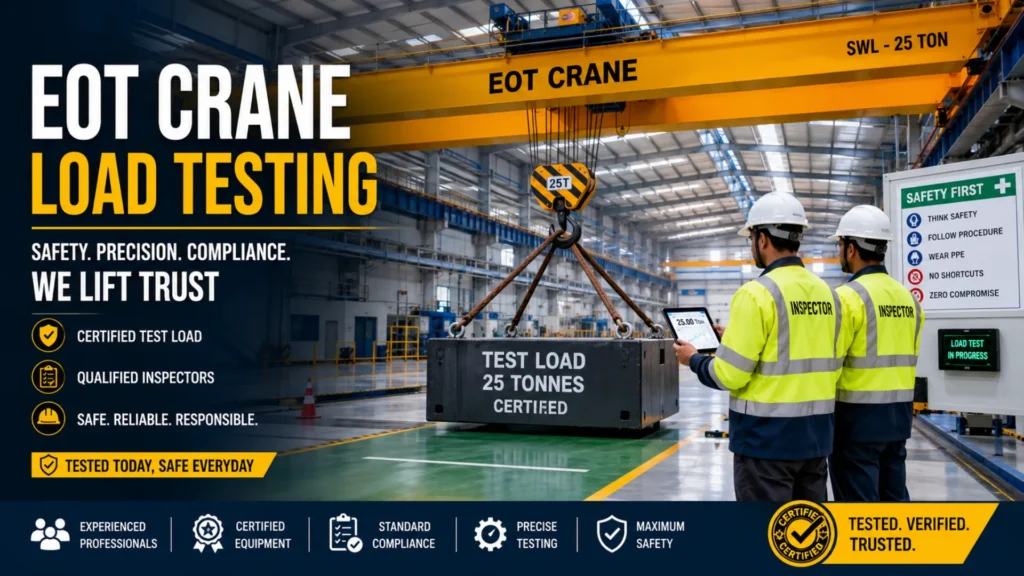
EOT crane load testing is an essential process that verifies whether an overhead crane can safely lift and handle its rated capacity under controlled conditions. During the test, the crane is subjected to a specified load to evaluate its structural strength, lifting performance, braking system, controls, and overall operational safety. This helps identify any hidden defects or performance issues before they become serious safety hazards.
Why Load Testing Is a Critical Safety Requirement
Regular load testing is not just a recommended practice—it is a vital part of industrial safety. It helps ensure that cranes can perform safely during daily operations, reducing the risk of equipment failure, dropped loads, and workplace accidents. A properly tested crane provides greater confidence to operators and maintenance teams while minimizing costly downtime caused by unexpected breakdowns.
Why Understanding Load Testing Requirements Matters
Knowing the correct EOT crane load testing requirements helps industries maintain a safer and more efficient workplace. It plays an important role in:
- Protecting workers: Proper load testing reduces the chances of crane-related accidents and creates a safer working environment.
- Improving equipment reliability: Routine testing confirms that the crane remains in good working condition, extending its service life and reducing maintenance costs.
- Ensuring regulatory compliance: Meeting required load testing standards helps businesses stay prepared for safety inspections, statutory audits, and legal compliance while demonstrating a strong commitment to workplace safety.
What Is EOT Crane Load Testing?
Definition of Load Testing
EOT crane load testing is the process of applying a controlled test load to an Electric Overhead Traveling (EOT) crane to verify that it can safely lift and handle its rated capacity. This test is carried out under controlled conditions using calibrated weights or certified test loads. The main purpose is to ensure the crane performs safely and efficiently before being put into regular service or after major repairs or modifications.
During the test, inspectors closely monitor the crane’s structural components, hoisting mechanism, brakes, trolley, bridge, and electrical systems. The goal is to verify both the structural strength and operational performance of the crane under actual working conditions.
Load Testing vs. Routine Inspection
Although both are essential for crane safety, load testing and routine inspections serve different purposes.
Routine inspections involve checking visible components such as wire ropes, hooks, brakes, controls, limit switches, and electrical systems for signs of wear, damage, or malfunction. These inspections are performed regularly to identify maintenance needs before problems become serious.
Load testing, on the other hand, is conducted at specific intervals, such as after installation, major repairs, structural modifications, or when required by safety regulations. Instead of simply examining components, it verifies that the entire crane can safely handle its rated load without excessive deflection, instability, or mechanical failure.
Objectives of Load Testing
The primary objectives of EOT crane load testing are to:
- Confirm the crane’s safe lifting capacity.
- Detect hidden structural or mechanical defects that may not be visible during routine inspections.
- Validate the crane’s overall performance, stability, braking efficiency, and operational reliability while carrying a load.
By performing regular load testing, industries can reduce the risk of equipment failure, improve workplace safety, comply with regulatory requirements, and extend the service life of their EOT cranes.
Why EOT Crane Load Testing Is Mandatory
EOT crane load testing is not just a recommended maintenance practice—it is a critical safety requirement for industries that rely on overhead cranes for material handling. Regular load testing confirms that the crane can safely lift its rated capacity while helping businesses comply with safety regulations and avoid costly failures.
Ensuring Workplace Safety
One of the primary reasons for load testing is to protect workers and the workplace. Testing helps prevent dangerous situations such as load drops, structural failures, or crane malfunctions that could result in serious injuries, equipment damage, or production losses.
Verifying Structural Strength
During load testing, the crane’s structural components—including the bridge, hoist, trolley, hooks, wire ropes, and supporting framework—are assessed under controlled stress conditions. This process helps identify hidden weaknesses, excessive wear, or defects before they develop into major failures.
Meeting Legal and Compliance Requirements
Many industries are required to perform periodic crane inspections and load testing to comply with factory safety regulations and industry standards. Maintaining proper test records also supports insurance claims, safety audits, and regulatory inspections.
Reducing Unexpected Downtime
Routine load testing detects performance issues early, allowing repairs to be scheduled before a breakdown occurs. This proactive approach improves operational reliability, reduces unplanned downtime, and helps maintain smooth production without costly interruptions.
Standards and Regulations Governing EOT Crane Load Testing
EOT crane load testing is an essential part of industrial safety and equipment maintenance. It ensures that a crane can safely lift its rated load without compromising structural integrity or operator safety. Following the correct standards and regulations also helps industries meet legal compliance requirements and reduce the risk of accidents.
Applicable Indian Standards
In India, EOT crane load testing should be carried out according to the applicable Indian Standards (IS) and industry safety guidelines. These standards define:
- Safe testing procedures
- Inspection methods
- Acceptance criteria
- Load limits
- Safety requirements
Following these standards helps industries maintain consistent inspection practices and improve workplace safety.
Factory and Workplace Safety Regulations
Employers are responsible for ensuring that cranes remain safe throughout their service life. This includes:
- Conducting periodic inspections
- Performing scheduled load testing
- Maintaining inspection records
- Repairing defects before operating the crane
- Allowing only trained personnel to operate lifting equipment
Regular inspections also make it easier to comply with factory safety audits and statutory requirements.
Manufacturer Recommendations
Every crane manufacturer provides maintenance and inspection guidelines. These recommendations include:
- Maximum lifting capacity
- Inspection intervals
- Lubrication schedules
- Component replacement guidelines
- Load testing procedures
Following the manufacturer’s recommendations helps improve equipment reliability and extend the crane’s service life.
International Best Practices
Many organizations also follow internationally recognized standards such as ISO, OSHA, and FEM guidelines. These best practices promote safer lifting operations, better documentation, and consistent inspection procedures across industries.
Types of EOT Crane Load Tests Explained
Different load tests evaluate different aspects of an EOT crane’s performance. Together, they confirm that the crane is structurally sound and operates safely under working conditions.
Static Load Test
The static load test checks the structural strength of the crane.
Purpose
Its primary objective is to verify that the crane can safely support a specified load without permanent deformation.
Procedure
During the test:
- A certified test weight is lifted slightly above the ground.
- The load is held in position for a specified time.
- Inspectors observe the crane structure carefully.
What Inspectors Evaluate
They look for:
- Structural deflection
- Permanent deformation
- Girder performance
- Hook condition
- Stability of the entire crane
Dynamic Load Test
A dynamic load test evaluates how the crane performs while moving under load.
What Happens During the Test?
The crane performs normal operating movements, including:
- Lifting
- Lowering
- Trolley travel
- Bridge travel
- Braking
Operational Performance Checks
Inspectors verify:
- Smooth crane movement
- Brake efficiency
- Motor performance
- Electrical controls
- Vibration levels
- Abnormal noises
Proof Load Test
A proof load test confirms that the crane can safely withstand a specified overload.
Purpose
This test demonstrates compliance with applicable safety standards before the crane enters or returns to service.
What Is Checked?
Inspectors verify:
- Structural safety
- Load-bearing capability
- Mechanical integrity
- Compliance with testing requirements
Functional Testing
Functional testing ensures that every operational component works correctly.
Components tested include:
- Hoist mechanism
- Trolley movement
- Bridge travel
- Brakes
- Limit switches
- Emergency stop system
- Warning alarms
- Control panels
Each component must function properly before the crane is approved for operation.
Which Test Is Required and When?
Different situations require different types of testing.
Typical scenarios include:
| Situation | Required Test |
|---|---|
| New crane installation | Complete load testing |
| Annual inspection | Static, dynamic, and functional testing |
| Major repairs | Full retesting |
| Structural modifications | Proof load testing |
| Component replacement | Functional and load testing |
Step-by-Step EOT Crane Load Testing Procedure
A systematic testing procedure ensures both safety and accurate results.
1. Pre-Test Preparation
Before testing begins, inspectors review:
- Crane specifications
- Rated lifting capacity
- Previous inspection reports
- Maintenance history
- Manufacturer recommendations
A detailed risk assessment is also carried out to identify hazards and establish a safe testing area.
2. Visual Inspection Before Testing
No load testing should begin without first performing a complete visual inspection.
Inspectors examine:
- Crane bridge
- Girders
- End carriages
- Wire ropes
- Hooks
- Sheaves
- Brakes
- Controls
- Electrical panels
- Limit switches
Any visible damage must be corrected before testing proceeds.
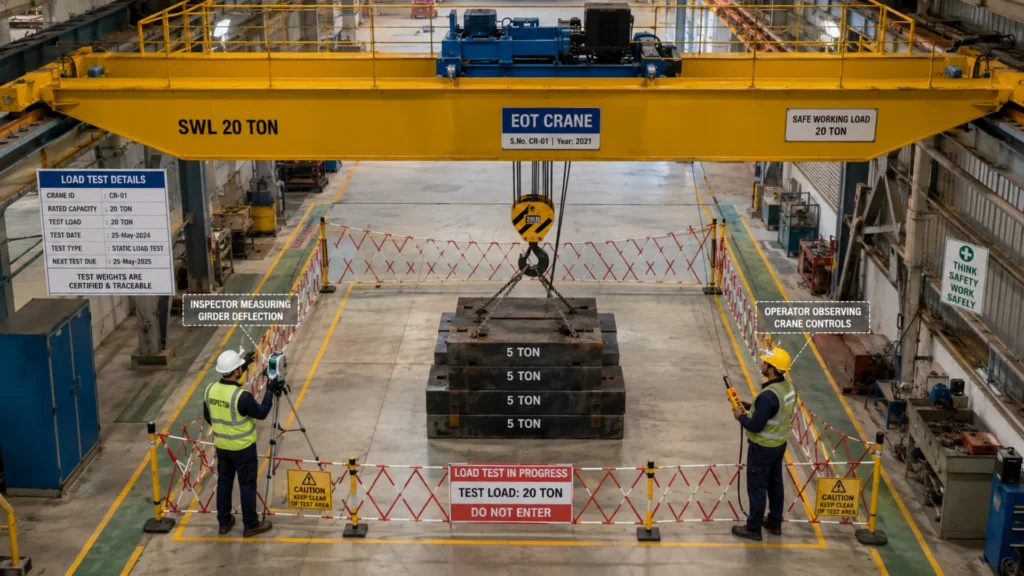
3. Setting Up Test Loads
Only certified test weights or approved water bag systems should be used.
During setup:
- Test weights are verified.
- Loads are positioned correctly.
- Lifting points are checked.
- Safety barriers are established around the testing area.
4. Conducting Static Load Testing
The crane lifts the certified test load slightly above the floor and holds it for the required duration.
During this stage, inspectors monitor:
- Structural deflection
- Hook performance
- Girder alignment
- Load stability
- Permanent deformation after unloading
5. Conducting Dynamic Load Testing
Once the static test is successful, the crane performs normal operating movements while carrying the test load.
This includes:
- Lifting
- Lowering
- Forward travel
- Reverse travel
- Trolley movement
- Emergency braking
Inspectors ensure that every movement is smooth and controlled.
6. Recording and Evaluating Results
After testing, inspectors prepare a detailed report containing:
- Test load used
- Inspection observations
- Measurements
- Deflection values
- Operational performance
- Pass or fail status
- Recommended corrective actions
Only cranes meeting all acceptance criteria should be certified for continued service.
EOT Crane Load Testing Requirements and Frequency
Regular testing keeps cranes safe and compliant throughout their operating life.
Before Initial Commissioning
Every new crane should undergo load testing before being placed into operation.
Annual Load Testing
Periodic load testing verifies that the crane continues to operate safely despite regular usage.
After Repairs or Modifications
Major structural repairs or modifications require the crane to be retested before returning to service.
After Component Replacement
Retesting is recommended whenever important components are replaced, such as:
- Hoists
- Hooks
- Wire ropes
- Brakes
- Girders
- Motors
Factors That Affect Testing Frequency
Testing frequency depends on several factors, including:
- Crane usage
- Number of lifting cycles
- Operating environment
- Exposure to chemicals or corrosion
- Heavy-duty applications
- Regulatory requirements
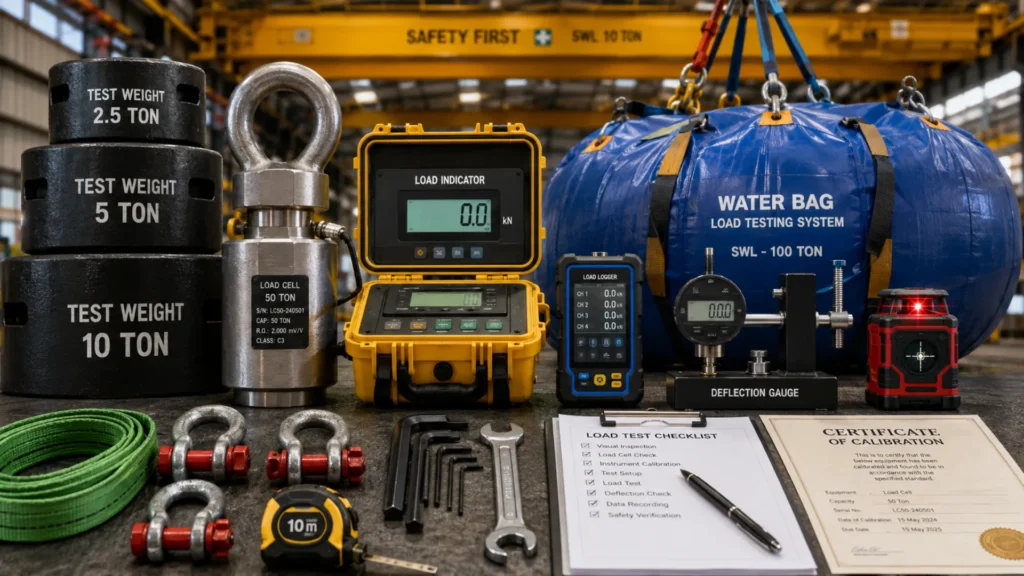
Equipment Used During EOT Crane Load Testing
Professional testing requires accurate and calibrated equipment.
Common equipment includes:
- Certified test weights
- Water bag load testing systems
- Load cells
- Digital weighing instruments
- Laser measuring devices
- Deflection gauges
- Inspection cameras
- Vibration monitoring instruments
Using calibrated equipment ensures accurate and reliable test results.
Common Defects Identified During Load Testing
Load testing often reveals hidden defects before they become major failures.
Common issues include:
- Excessive structural deflection
- Poor brake performance
- Worn wire ropes
- Hook deformation
- Electrical faults
- Control system failures
- Rail misalignment
- Excessive vibration
- Loose mechanical connections
Early detection reduces repair costs, prevents unexpected downtime, and improves workplace safety.
Documentation and Certification Requirements
Proper documentation proves that testing has been completed correctly.
Industries should maintain:
- Load test reports
- Inspection checklists
- Compliance certificates
- Calibration certificates
- Maintenance records
Well-organized records simplify audits and demonstrate compliance with safety regulations.
Common Mistakes Industries Make During Load Testing
Many safety problems result from avoidable mistakes, including:
- Skipping scheduled inspections
- Using uncertified testing equipment
- Maintaining incomplete records
- Ignoring small defects
- Hiring unqualified inspection personnel
Avoiding these mistakes significantly improves crane reliability and workplace safety.
Benefits of Professional EOT Crane Load Testing Services
Hiring qualified professionals offers several advantages:
- Improved workplace safety
- Compliance with industry regulations
- Reduced maintenance costs
- Longer equipment lifespan
- Better operational reliability
- Detailed inspection reports
- Increased confidence during safety audits
Professional inspectors use certified equipment and standardized procedures to deliver accurate, reliable results.
Conclusion
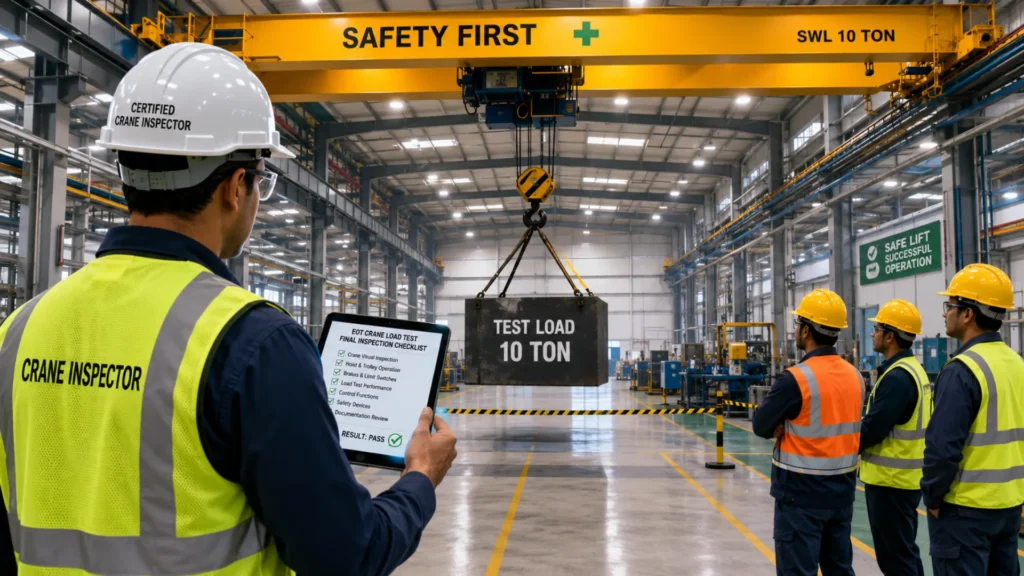
Regular EOT crane load testing is essential for maintaining safe lifting operations, protecting workers, and complying with industry regulations. It helps identify structural weaknesses, confirms operational performance, and reduces the risk of unexpected equipment failure.
Every organization should establish a documented load-testing schedule, follow manufacturer recommendations, maintain accurate inspection records, and work with qualified crane inspection professionals. A proactive approach to testing not only improves workplace safety but also extends crane life, reduces downtime, and supports long-term operational efficiency.
Frequently Asked Questions (FAQs)
Is EOT crane load testing mandatory?
Yes. Most industrial facilities are required to perform periodic load testing to ensure cranes remain safe and compliant with applicable safety regulations.
How often should an EOT crane be load tested?
Load testing is typically performed before initial commissioning, annually, and after major repairs, modifications, or replacement of critical components.
What percentage load is used during testing?
The required proof load depends on the applicable standard and manufacturer recommendations. Certified inspectors determine the correct testing load.
Can an EOT crane operate without a valid load test certificate?
No. Operating a crane without a valid load test certificate can create serious safety risks, lead to regulatory non-compliance, and increase the likelihood of equipment failure.